BLOG / PRICING
How Much Does Concrete Removal Cost? Full Pricing Guide

If you’ve ever tried to get a clear answer, you already know how confusing it can be. One contractor gives a low estimate, another quotes much higher, and suddenly you’re left wondering what’s fair and whether you’re paying more than you should.
Many homeowners and property owners overpay for concrete removal simply because they don’t know what affects the price. Concrete removal cost can change based on things like slab type, thickness, location, access, and even permit rules. Without understanding these details, it’s easy to accept a quote that doesn’t actually match the work involved.
This guide breaks down concrete removal costs in a clear and simple way. You’ll see real price ranges, learn what raises or lowers the cost, and understand why two similar projects can end up with very different prices. By the end, you’ll know what goes into a quote, how to spot unnecessary charges, and how to make better decisions before hiring anyone.
We’ll also cover what it costs to remove concrete yourself, when hiring a professional makes more sense, and practical ways to keep your concrete demolition costs under control.
Key Takeaways: Concrete Removal Cost
-
Concrete removal cost usually ranges from $2 to $10 per square foot, depending on the job.
-
Concrete type matters. Reinforced or decorative concrete costs more to remove.
-
Location changes pricing. Cities cost more than rural areas due to labor and dump fees.
-
Bigger projects cost more overall, but smaller jobs can cost more per square foot.
-
Thicker concrete raises costs fast. Slabs over 6 inches need more labor and equipment.
-
Permits can add $40 to $500, based on local rules and public access.
-
Reinforced concrete often pushes costs to $6 per square foot or higher.
-
Limited access can raise prices by $1 to $8 per square foot.
-
DIY concrete removal often costs $3 to $7 per square foot after tools and disposal.
-
Hiring a pro usually costs $4 to $10 per square foot and saves time and risk.
-
Recycling concrete and bundling removal with replacement can lower the total cost.
-
Comparing multiple quotes helps avoid overpaying.
Concrete Removal Cost: What Affects the Final Price
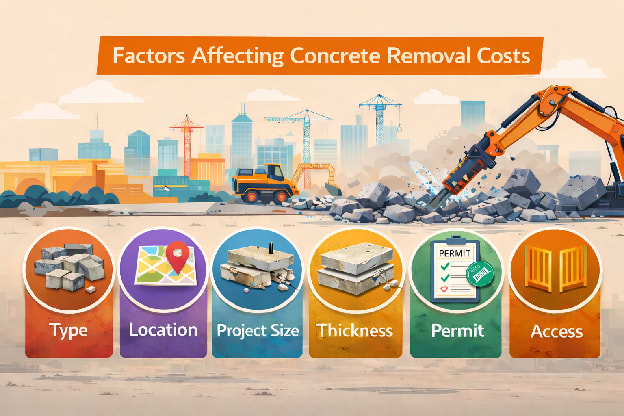
Concrete removal isn’t charged one flat rate, and knowing what’s included can save you from unexpected add-ons.
The points below explain where costs usually rise, where they stay lower, and what contractors look at before giving a quote. Understanding these factors puts you in control when comparing prices.
1. Cost Differences Based on Concrete Type
Concrete removal cost changes because each concrete type has a different strength and condition. Some slabs break easily with basic tools.
Others contain steel, fibers, or dense mixes that need more cutting, heavier equipment, extra labor, and higher disposal fees. The table below shows common concrete types and how they affect the price.
| Concrete Type | Cost per Square Foot (Demolition + Disposal) |
|---|---|
| Plain concrete (no steel) | $2 – $4 |
| Light reinforced concrete | $3 – $6 |
| Heavily reinforced concrete | $5 – $9 |
| Stamped or decorative concrete | $4 – $7 |
| Concrete with asphalt mix | $3 – $6 |
| Old or crumbling concrete | $2 – $3 |
| Industrial or commercial concrete | $6 – $10 |
| Fiber-reinforced concrete | $4 – $8 |
Calculate Your Junk Removal Cost
Calculator2. Price Changes Based on Location
Concrete removal price often changes based on where the job is located. Labor rates, travel time, dump fees, and local rules all play a role.
Jobs in busy cities usually cost more than jobs in open rural areas. Tight streets, traffic, and higher disposal fees push prices up, while open access and shorter hauling distances help keep costs lower.
In many urban areas, concrete removal typically falls in the $5 to $15 per square foot range. Rural pricing can stay lower, but hard access, long travel distances, or rough terrain can raise the total.
| Region | Cost per Square Foot (Demolition + Disposal) |
|---|---|
| West | $5 – $11 |
| Midwest | $6 – $11 |
| Southeast | $6 – $10 |
| Northeast | $7 – $15 |
3. Cost Differences by Project Size and Purpose
Concrete demolition and removal cost changes based on what you’re removing and how big the job is. Small projects need less time and fewer tools. Large or structural projects take more labor, heavier equipment, and higher disposal fees. That’s why prices vary so widely from one project to another.
Projects like steps or small slabs cost less because crews can break and load them quickly. Driveways, patios, and foundations cost more due to size, thickness, and weight. Structural work also needs careful handling to avoid damage to nearby areas.
Below is a clear price range by common project type, based on demolition and disposal.
| Project Type | Typical Cost Range (Demolition + Disposal) | Cost Notes |
|---|---|---|
| Concrete slab removal | $610 – $1,750 | Smaller slabs cost less. Reinforced slabs raise the concrete slab removal cost. |
| Sidewalk removal | $800 – $2,090 | Long runs increase labor and loading time. |
| Patio removal | $850 – $2,750 | Decorative finishes and thickness affect price. |
| Concrete driveway removal | $1,050 – $3,100 | Larger surface area and vehicle access raise the concrete driveway removal cost. |
| Concrete stairs removal | $250 – $650 | Small size keeps labor low. |
| Concrete wall removal | $850 – $1,650 | Height and steel content impact the concrete block wall demolition cost. |
| Foundation removal | $2,300 – $7,700 | Deep, thick concrete requires heavy equipment and longer labor time. |
4. Concrete Thickness and Its Impact on Cost
Concrete thickness has a direct effect on removal cost because thicker slabs take more time, force, and equipment to break and haul away.
Thin concrete, around 2–3 inches, usually costs $2–$4 per square foot to remove since crews can break it quickly. Medium slabs, around 4–5 inches, often cost $4–$7 per square foot due to added weight and cutting time.
Thick concrete, 6 inches or more, can reach $6–$10 per square foot because it needs heavy tools, more labor, and higher dump fees.
Driveways, garage floors, and foundations cost more since builders pour them thicker to handle the load. As thickness increases, labor time, equipment use, and disposal costs rise together, which pushes the total price up.
5. Permit Fees Required for Concrete Removal
Permit costs rise when the job involves public sidewalks, curb connections, or street access. Projects near utilities may also need approval, which adds time and fees. Checking permit rules before starting helps avoid fines, delays, and surprise costs later.
Cities usually charge more due to inspections and local rules. Rural areas often charge less or skip permits for private property work.
Below are typical permit fee ranges by region. Actual fees can change by city or county.
| Region | Permit Fee Range |
|---|---|
| West | $75 – $300 |
| Midwest | $50 – $200 |
| Southeast | $40 – $175 |
| Northeast | $100 – $500 |
| Rural areas (most regions) | $0 – $100 |
6. Additional Cost for Reinforced Concrete
Concrete often contains steel bars or wire mesh to increase strength, especially in slabs thicker than six inches.
These materials slow the removal process because crews must cut through metal before breaking the concrete. Extra cutting and handling increase labor time, which can push costs to $6 per square foot or higher.
7. Access Limitations That Increase Removal Costs
Access to the work area has a direct impact on the concrete removal price. When crews can reach the slab with trucks and equipment, the job moves faster and costs less. Tight spaces force crews to use hand tools and make multiple trips, which raises labor time and hauling charges.
Backyards with narrow gates, fenced areas, or no driveway access often increase costs by $1–$8 per square foot or more. Slabs located behind homes, between buildings, or under decks take longer to remove because material must be carried out by hand.
Basement or indoor concrete removal costs more due to limited movement and cleanup needs. When equipment access drops, labor hours rise, and the final price follows.
Cost of Removing Concrete Without Professional Help
Removing concrete on your own may look cheaper at first, but costs add up fast. Most people underestimate the time, tools, and disposal fees involved.
Tool rental costs start quickly. A jackhammer usually costs $60–$150 per day. A concrete saw adds $75–$200 per day. Safety gear costs extra. Dump fees increase the total. Landfills charge by weight. Concrete disposal often runs $40–$100 per ton. Heavy slabs raise this cost fast.
Transportation also matters. You may need to rent a truck or trailer. Rental costs range from $50–$120 per day, plus fuel. Time has a cost. Breaking thick concrete can take several days. Missed work or delays increase the real expense.
Injuries raise risk. Concrete work strains hands, back, and joints. Medical bills can cost more than professional removal.
DIY concrete removal often costs $3–$7 per square foot. Mistakes can push it higher.
When Hiring a Concrete Removal Pro Is the Better Option
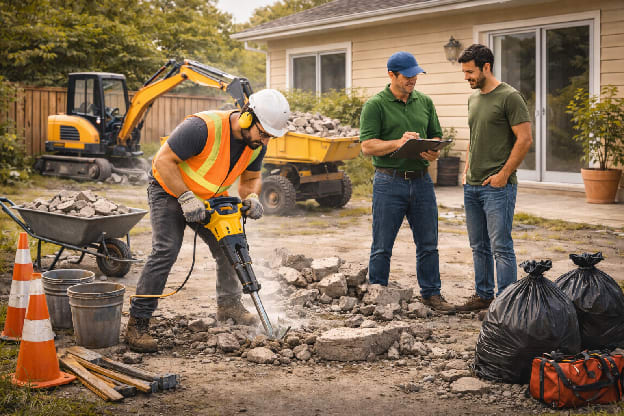
Hiring a concrete removal pro makes sense for large, thick, or reinforced slabs. Professionals use heavy equipment that breaks concrete fast and reduces labor time. Most pros charge $4–$10 per square foot, which often includes labor, hauling, and disposal.
This cost replaces tool rentals, dump fees, and truck rentals. Jobs with rebar, tight access, or indoor concrete raise DIY costs quickly. Pros also handle permits and follow local dump rules, which helps avoid fines. Many projects finish in one day instead of several.
When you add tool rental, disposal, time off work, and injury risk, professional removal often costs less overall and delivers cleaner, safer results.
Practical Choice to Reduce Concrete Demolition Costs
Checking recycling options can lower concrete demolition costs. Some contractors work with concrete recycling programs that charge less than landfills. Local recycling incentives may also reduce disposal fees.
Always speak with at least three concrete demolition companies to compare prices and avoid overpaying. Ask each contractor what their quote includes so you can spot hidden costs.
If you plan other work, handle follow-up tasks like landscaping or grading yourself to save $300–$1,000. Before choosing DIY removal, make sure you can finish the job safely and on time.
Tool rentals and dump fees add up fast if the project stalls. If you plan to pour new concrete, ask if the contractor includes removal in the replacement price. Bundled jobs often reduce total cost and save time.
Conclusion
Concrete removal costs change based on many details. Knowing these costs before you start helps you avoid paying more than needed. Always check slab size, thickness, access, and steel inside the concrete. Ask clear questions before accepting any quote.
After the work ends, inspect the area carefully. Make sure crews remove all debris and leave the site clean. Confirm proper disposal or recycling. Keep your invoice and permit records.
Planning before the job saves money. Checking after the job protects you. A little preparation on both ends keeps concrete removal simple, fair, and stress-free.
FAQs About Concrete Removal Cost
How much does concrete removal cost per square foot?
Concrete removal usually costs $2 to $10 per square foot. Thin slabs cost less. Thick or reinforced concrete costs more. Access and disposal also affect the price.
Is concrete removal cheaper if I do it myself?
DIY removal looks cheaper, but costs add up fast. Tool rental, dump fees, and time often push DIY costs close to professional rates.
Does reinforced concrete cost more to remove?
Yes. Steel bars or wire mesh slow the work. Cutting metal adds labor time. Reinforced concrete often costs $3–$6 or more per square foot.
Do I need a permit to remove concrete?
Some cities require permits for driveways, sidewalks, or foundations. Fees range from $40 to $500, depending on location. Always check the rules before starting work.
What is the cheapest way to reduce the concrete removal cost?
Improve access, remove only damaged sections, and compare multiple quotes. Recycling concrete can also lower disposal fees.
Shushmita Karmakar is an experienced content writer at Wecycle, with over 3 years of expertise creating clear, helpful, and SEO-focused content. She specializes in writing about junk removal, recycling, and sustainable waste solutions, helping readers make informed, eco-friendly choices. Her work combines practical insights with an easy-to-read style that connects with both homeowners and businesses.


Need junk gone fast? See pricing in your area
Enter your zip code to see if Wecycle operates in your location.