BLOG / OTHER
4 Types of Dumpsters: Which One Should You Choose?
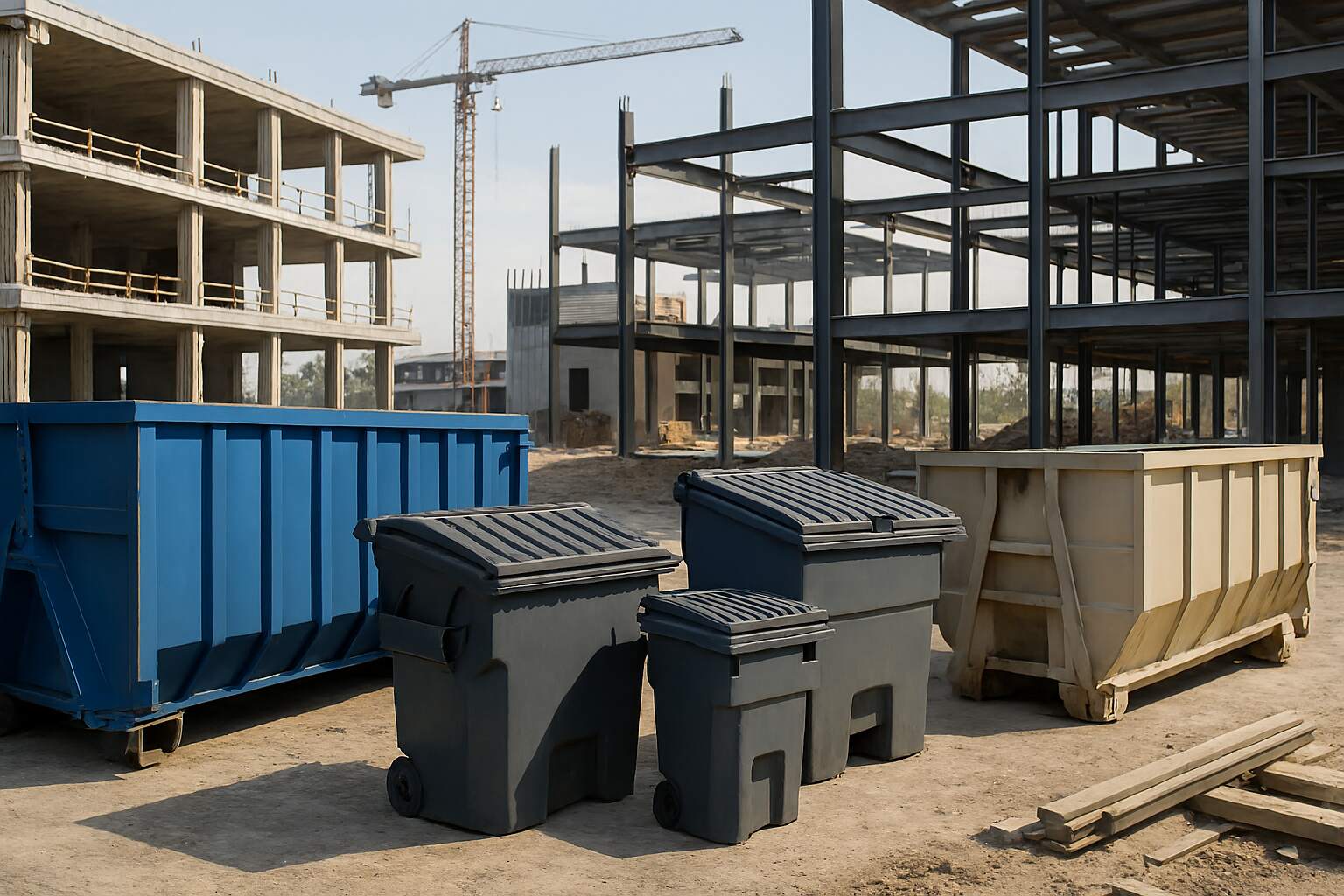
When people search for types of dumpsters, they want a clear answer: which dumpster fits my project? The right choice depends on your needs. A roll-off dumpster works well for junk removal, construction, demolition, yard waste, and event waste.
A front-load dumpster suits businesses with regular trash pickup, like offices, retail stores, restaurants, and property management. A rear-load dumpster fits small spaces behind stores. A compacting dumpster handles large amounts of waste and reduces volume to save space.
Dumpster rentals usually start at $380, depending on weight, rental time, and the type of trash. After reading this blog, you will understand the different types of dumpsters, when to use each one, and how to choose the right option for your project and budget.
Different Types of Dumpsters: Cost, Capacity, & Common Uses
Not sure which dumpster can handle your project without extra cost or stress? Let’s look at the different dumpster types, their capacity, weight limits, and where each one works best. Once you understand the common dumpster styles, choosing the right one becomes much easier.
1. Roll-Off Dumpsters

A roll-off dumpster is a large, open-top container designed for temporary projects that create heavy waste. It works best for renovations, home cleanouts, construction, and demolition jobs. Rental periods usually last seven to 10 days, though some projects may extend longer depending on your needs.
Capacity ranges between 10 and 40 cubic yards, which makes it ideal for bulky debris. Many standard week-long rentals include delivery, pickup, and disposal fees. Smaller dumpsters (10–15 yards) usually cost $250 to $500+ per week. Mid-sized units (20–30 yards) range from $350 to $750+. Large 40-yard containers can cost $450 to $1,000+, depending on location.
Final cost depends on size, rental length, weight limits, overage fees, landfill charges, permits, and type of trash.
| Pros | Cons |
|---|---|
| Large capacity up to 40 cubic yards | Limited rental timeline |
| Handles heavy debris | May require a permit if placed on the street |
| Flexible for many project types | Takes up driveway space |
| Easy delivery and pickup | Overweight fees may apply |
Best For: Renovations, demolition, junk removal, yard waste, and event cleanup
Rating: ★★★★★ (5/5 for large-scale temporary projects)
2. Front-Load Dumpsters

A front-load dumpster is a small, lidded container used for regular trash service at businesses. These dumpsters stay at the property, and a truck empties them on a schedule that fits your needs. You’ll see them behind restaurants, stores, coffee shops, and offices. The truck uses hydraulic arms to lift and empty the trash into the truck.
Front-load dumpster sizes range from 2 to 8 cubic yards, with weight limits usually between 400 and 1,600 pounds. Commercial dumpster service typically runs about $100–$200/month for 2-yd, $150–$250/month for 4-yd, $200–$300/month for 6-yd, and $250–$350+/month for 8-yd containers, depending on pickup frequency and location.
Final cost also depends on trash volume, extra pickups, and waste type.
| Pros | Cons |
|---|---|
| Long-term scheduled service | More expensive over time |
| Easy daily trash disposal | Smaller capacity |
| Stays at your business location | Overage fees may apply |
Best For: Ongoing trash removal from restaurants, stores, offices, and commercial spaces
Rating: ★★★★☆ (4/5 for consistent commercial waste service)
3. Rear-Load Dumpsters

A rear-load dumpster works like a front-load dumpster, but the truck empties it from the rear using a winch system instead of hydraulic arms. You often see these behind restaurants, stores, apartments, and other commercial buildings.
Property owners use them for ongoing trash removal. The container stays at the location, and the company empties it on a set schedule. These dumpsters have lids for easy daily use. Sizes range from 2 to 8 cubic yards.
Monthly service usually costs $100 to $350 or more, depending on size, pickup frequency, location, waste volume, contract terms, and local landfill fees.
| Pros | Cons |
|---|---|
| Ongoing scheduled service | Long-term expense |
| Easy trash removal | Limited to 8 cubic yards |
Best For: Ongoing trash removal from commercial spaces
Rating: ★★★★☆ (4/5 for steady business waste service)
4. Compacting Dumpsters

A compacting dumpster is a large container that also works as a trash compactor. It looks similar to a roll-off dumpster, but it has a built-in mechanism that crushes waste to reduce volume. This feature allows you to store several times more trash in the same space. The collection works like a roll-off system.
The company removes the entire unit when full. Since businesses often use compactors for ongoing waste, the provider usually delivers an empty unit at the same time. These dumpsters can reach up to 40 cubic yards, but compaction increases actual holding capacity.
Monthly service often ranges from $500 to $1,500 or more, depending on size, pickup frequency, waste type, maintenance needs, and location.
| Pros | Cons |
|---|---|
| Maximizes waste capacity | Higher upfront cost |
| Reduces pickup frequency | Requires a power source |
| Saves space on the property | |
| Controls odor and loose debris |
Best For: Ongoing trash removal from industrial buildings, large commercial properties, warehouses, hospitals, and institutions
Rating: ★★★★★ (5/5 for high-volume waste management)
Side-by-Side Comparison of the 4 Types of Dumpsters
| Type | Best For | Price Range | Capacity | Rental Length |
|---|---|---|---|---|
| Roll-Off Dumpster | Renovations, demolition, junk removal, yard waste, event cleanup | $250–$1,000+ per week (starts around $380) | 10–40 cubic yards | 7–10 days (can extend) |
| Front-Load Dumpster | Restaurants, stores, offices, retail, property management | $100–$200 (2 yard), $150–$250 (4 yard), $200–$300 (6 yard), $250–$350+ (8 yard) per month | 2–8 cubic yards | Long-term scheduled service |
| Rear-Load Dumpster | Commercial buildings, apartments, ongoing business trash | $100–$350+ per month | 2–8 cubic yards | Long-term scheduled service |
| Compacting Dumpster | Industrial buildings, large commercial properties, institutions | $500–$1,500+ per month | Up to 40 cubic yards (higher effective capacity with compaction) | Long-term ongoing service |
Other Specialized Types of Dumpsters for Different Waste Materials
Beyond the four common types of dumpsters, some projects need containers designed for specific materials or disposal requirements. Specialized dumpsters can help manage recyclable materials, heavy debris, wet waste, and other waste streams that standard containers may not safely accommodate.
Understanding these options can help you choose a waste management solution that fits your project.
1. Recycling Dumpsters
Recycling dumpsters are designed to collect materials that can be processed and reused instead of being sent directly to landfills. They are commonly used at businesses, construction sites, apartment complexes, and community cleanup events.
Depending on the recycling program, these containers may accept cardboard, paper, certain plastics, aluminum cans, and other approved materials.
Some locations offer single-stream recycling, where multiple accepted recyclable materials can be collected in one container. Other recycling programs require separate dumpsters for cardboard, metals, or other materials.
Best for: Office cleanouts, commercial properties, cardboard disposal, and projects generating large amounts of recyclable waste.
Important: Always confirm which materials the recycling provider accepts. Mixing food waste, chemicals, or other prohibited items with recyclables can contaminate the load.
2. Tub-Style Dumpsters
Tub-style dumpsters are open-top containers with a lower profile than many standard roll-off dumpsters. Their design can make it easier to load certain heavy or bulky materials.
These containers are sometimes used for construction debris, roofing materials, concrete, dirt, and landscaping waste. However, accepted materials and weight capacities depend on the specific container and rental provider.
Their lower sides can be helpful when workers need to load debris manually rather than using large equipment.
Best for: Roofing projects, landscaping work, small demolition projects, and heavy debris removal.
For dense materials such as concrete or soil, confirm the maximum allowed weight before selecting a tub-style dumpster.
3. Sealed Dumpsters
Sealed dumpsters are specially designed containers that help prevent liquids or wet materials from leaking during storage and transportation.
Unlike ordinary open-top dumpsters, these containers may include sealed construction, watertight features, or specialized containment systems.
They can be useful for certain industrial, commercial, and cleanup operations where leak prevention is important.
Best for: Approved wet waste, certain industrial applications, and projects requiring additional liquid containment.
Important: A sealed dumpster does not automatically make hazardous or liquid waste acceptable. The container, transportation method, and disposal facility must be approved for the specific material.
4. Dewatering Dumpsters
Dewatering dumpsters are specialized containers designed to separate free liquid from certain solid waste materials.
They may use filtration systems, screens, liners, or drainage features to allow controlled liquid separation before the remaining solids are transported for disposal.
These containers are primarily used in industrial, environmental, and construction applications involving approved wet solids or sludge.
Best for: Certain wastewater treatment operations, industrial cleanup projects, and construction activities involving wet sediment.
Dewatering containers require appropriate handling, and any collected liquid must be managed according to applicable regulations. They are not intended for ordinary household trash.
Things to Consider When Comparing Different Types of Dumpster Rentals
Getting the right dumpster for your project helps you avoid delays and extra costs. Before you decide, review these important factors:
Capacity: Choose the correct size. Too large means wasted money. Too small means overflow, delays, or renting another dumpster. If unsure, ask the rental company for advice based on your project.
Cost: Dumpster price depends on type. Compactor dumpsters cost the most because they include built-in compression. Front-load and rear-load options cost less in the short term but can become expensive with ongoing service. Balance the budget with waste needs.
Time: Roll-off dumpsters work best for temporary projects like construction or demolition. Front-load, rear-load, and compactors suit long-term trash removal.
Accessibility: Make sure trucks can access your property. Tight spaces or narrow roads may limit options.
Debris Type: Roll-offs accept most materials except hazardous waste. Front-load, rear-load, and compactors often restrict certain items. So always talk with your dumpster rental provider first to confirm what materials they allow before loading waste.
Conclusion
Selecting the right option from the different types of dumpsters makes your project easier from day one. When you understand size, cost, time, and debris limits, you avoid stress and extra fees. A small decision now can save hundreds of dollars later.
Whether you need a short-term roll-off or long-term service for your business, the right choice keeps your space clean and your work on track. Take a few minutes to compare your needs before booking. When you match the right dumpster to your job, you move faster, stay organized, and complete your project with confidence.
Still unsure which dumpster fits your project? Contact us for a free size recommendation from experts.
Frequently Asked Questions
What are the main types of dumpsters available?
The main types include roll-off, front-load, rear-load, and compacting dumpsters, each built for specific waste volumes and project needs.
What is a roll-off dumpster?
A roll-off dumpster is a large, open-top container delivered by truck for temporary projects like renovations and construction debris removal.
Which dumpster type works best for home renovations?
Roll-off dumpsters work best for home renovations because they handle bulky debris and provide flexible short-term rental options.
How much do different types of dumpsters cost?
Dumpster costs vary by size, type, rental period, weight limits, and location, starting around $380 for smaller roll-off containers.
Can I throw any type of waste in a dumpster?
Most dumpsters accept household junk and construction debris, but do not allow hazardous waste, chemicals, batteries, or flammable materials.
What is the difference between a regular dumpster and a recycling dumpster?
A regular dumpster generally collects approved waste for disposal, while a recycling dumpster is intended for materials accepted by a recycling program. Some recycling containers accept mixed recyclables, while others require separated materials.
How do I know if I need a 20-yard or 30-yard dumpster?
A 20-yard dumpster is often suitable for moderate renovations and large home cleanouts. A 30-yard container may be better for larger remodeling or construction projects. Your final choice should account for both debris volume and material weight.
Shushmita Karmakar is an experienced content writer at Wecycle, with over 3 years of expertise creating clear, helpful, and SEO-focused content. She specializes in writing about junk removal, recycling, and sustainable waste solutions, helping readers make informed, eco-friendly choices. Her work combines practical insights with an easy-to-read style that connects with both homeowners and businesses.


Need junk gone fast? See pricing in your area
Enter your zip code to see if Wecycle operates in your location.