BLOG / HOW TO
How to Dispose of a Refrigerator Properly

The old refrigerator sits there. Unplugged. Empty. Still taking up space. You keep telling yourself you’ll deal with it this weekend. Then another weekend passes.
At some point, everyone asks the same question: how to dispose of a refrigerator unit without turning it into a headache. You might think about leaving it outside, calling a friend, or dragging it to the curb. Then the doubts start. Will the city take it? Is that even allowed?
Most people don’t really know what to do with old refrigerator models once they stop working. They’re heavy. They contain chemicals. And you can’t treat them like normal trash. That’s where refrigerator disposal becomes confusing.
Here’s the good part. You don’t have to figure this out alone. There are safe, simple options that won’t waste your time or cause problems later. We’re here to explain those options clearly, step by step, so you can finally clear the space and move on.
Why Old Refrigerators Need Proper Disposal
An old refrigerator does more than take up space. Inside, it holds refrigerant that keeps food cold. Most newer fridges use HFC-134a. It replaced older chemicals like CFCs, which caused major ozone damage. Even so, HFC-134a can still harm the environment if it leaks.
When someone dumps a fridge the wrong way, refrigerant can escape. That leak adds to air pollution and traps heat. It affects the planet and public health.
Proper disposal stops this problem. Trained technicians remove the refrigerant safely. They recover it and reuse it instead of releasing it.
Refrigerators also contain metal, plastic, and glass. Recycling these materials saves energy and reduces landfill waste.
Many cities enforce strict rules. Improper disposal can lead to fines or rejected pickups. Safe disposal protects the environment, follows the law, and frees your space the right way.
How to Prepare Before Removing a Refrigerator
Before removing a refrigerator, take a few simple steps to avoid damage, delays, or safety issues. Start by emptying the fridge. Remove all food, shelves, and drawers.
This prevents spills and reduces weight. Next, unplug the unit and let it sit for at least 24 hours. This allows ice to melt and moisture to dry.
Clean the inside to avoid odors and mold. Tape the doors shut so they don’t swing open during lifting. Measure doorways, hallways, and stairs to confirm the fridge fits through without scraping walls. Clear a path from the kitchen to the exit.
If the refrigerator has a water line, shut off the valve and disconnect it carefully. Wear gloves and closed shoes for protection. These steps make removal safer and smoother.
Refrigerator Disposal Laws in the USA You Must Know
When you dispose of an old fridge in the United States, there are important rules to follow so you stay safe and legal:
1. Remove the Doors for Safety: Federal and local safety guidelines require you to remove or secure refrigerator doors before disposal. This prevents children from getting trapped inside while playing.
2. Certified Refrigerant Removal (Clean Air Act – Section 608): The Clean Air Act makes it illegal to release refrigerant (like Freon) into the air. A Section 608-certified technician must recover refrigerant safely before disposal or recycling.
3. EPA Safe Disposal Requirements: Under EPA rules (40 CFR Part 82, Subpart F), refrigerators must have their refrigerant removed before entering waste or recycling streams. If a recycler accepts a fridge with refrigerant already removed, they must keep a signed statement confirming it.
4. Hazardous Components: Other hazardous parts, like compressor oil and certain insulation, must be handled properly. These items may be regulated under hazardous waste laws.
5. State & Local Rules Add More Steps: Some states ban the landfilling of refrigerators entirely or require certified appliance recyclers. Others may offer special pick-up schedules or require appointments for bulky appliance disposal.
Following these laws protects children, avoids fines, and keeps dangerous gases out of the air. Always check with your city or waste hauler for local rules before disposal.
7 Practical Ways on How to Dispose of a Refrigerator
Getting rid of a refrigerator doesn’t have a single solution. The right option depends on its condition, your location, and how much effort you want to put in.
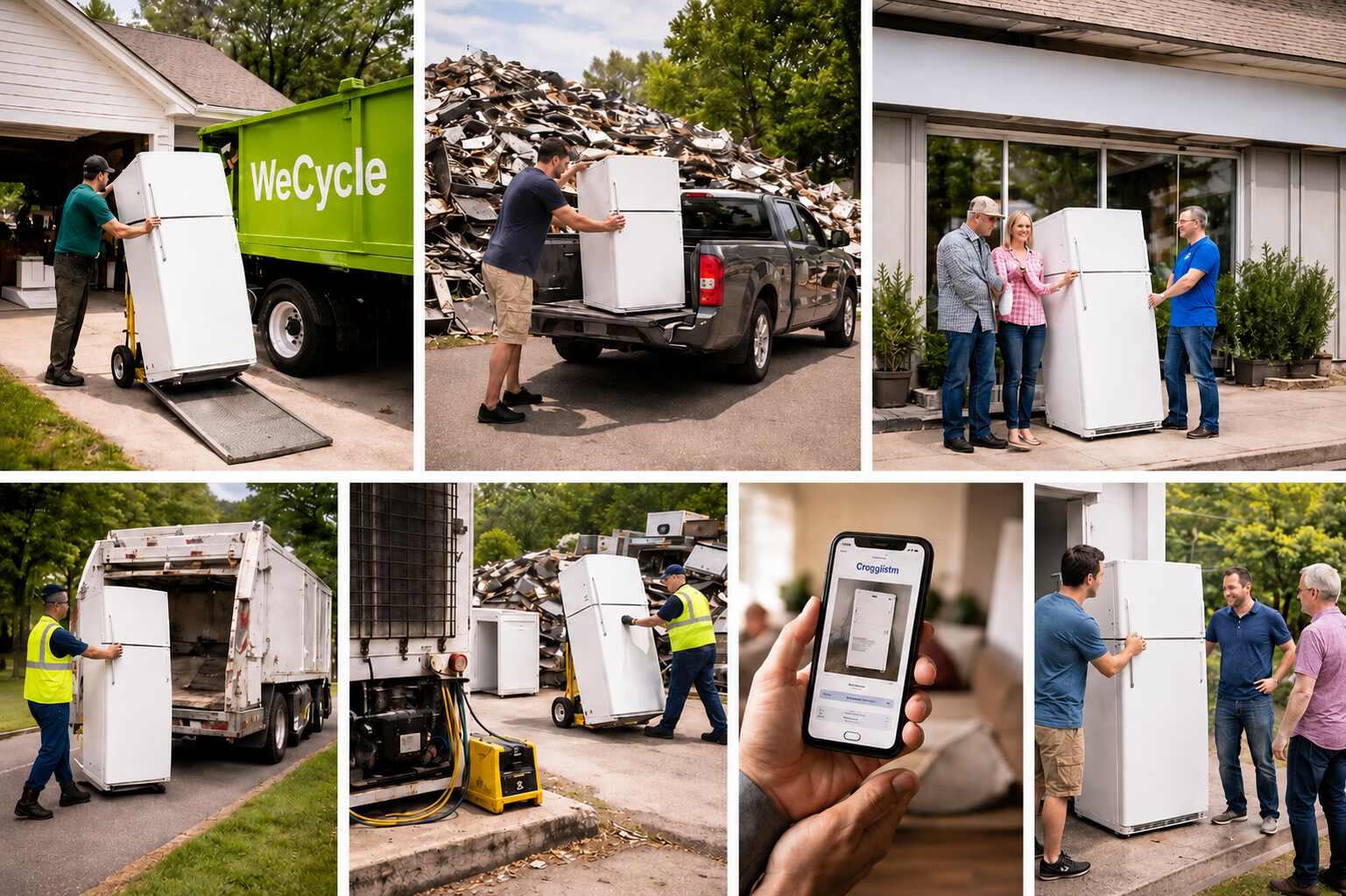
Below are seven reliable ways people across the U.S. handle refrigerator disposal. Each method offers a legal and responsible way to dispose of a refrigerator.
1. Retailer Haul-Away Services
Major retailers such as Home Depot, Lowe’s, Best Buy, Costco, and AJ Madison offer refrigerator removal when delivering a new unit.
After scheduling delivery, the team disconnects the old fridge, secures or removes the doors, and transports it to a certified recycling facility.
Refrigerant recovery and material recycling happen through approved partners, making this one of the easiest options.
2. Electric Utility Appliance Recycling Programs
Electric providers like PG&E, Southern California Edison, Duke Energy, Con Edison, and Xcel Energy offer appliance recycling to reduce energy waste.
Once you schedule a pickup, the provider collects the refrigerator, confirms size and eligibility, and sends it for certified recycling. Many programs offer bill credits or cash incentives.
3. EPA Responsible Appliance Disposal (RAD) Program
The Environmental Protection Agency runs the RAD program to ensure environmentally safe refrigerator disposal.
Participating recyclers remove refrigerant, capture foam insulation, manage hazardous components, and recycle metals properly.
This process follows strict environmental standards and helps reduce greenhouse gas emissions.
4. Municipal Waste Management & Bulk Pickup
Local waste departments and companies like Waste Management, Republic Services, Recology, and Casella Waste Systems handle bulky appliance pickups.
You schedule a collection date, prepare the refrigerator according to local rules, and place it in the approved pickup area. The provider ensures legal handling and recycling after collection.
5. Junk Removal Companies
Professional junk removal services take the stress out of refrigerator disposal. From the moment you book, the responsibility shifts off your shoulders.
Trained crews arrive on time, handle all the heavy lifting, and remove the refrigerator safely from kitchens, basements, or garages without damaging floors or walls.
They secure the doors, follow safety rules, and transport the unit to approved recycling facilities. You don’t need tools, extra help, or a truck. This option works especially well for large, heavy refrigerators or homes with stairs and tight spaces.
It also saves time and reduces risk, making it one of the most reliable and hassle-free ways to handle refrigerator removal the right way.
6. Scrap Metal Recycling Facilities
Scrap metal recyclers focus on one thing: recovering valuable materials from old appliances. Companies like Sims Metal, SA Recycling, and EMR accept refrigerators mainly for steel, copper, and aluminium.
Many people ask, can you scrap a refrigerator, and the answer is yes, but only after proper prep. Most scrap yards require refrigerant removal before drop-off. This step follows federal law and protects workers.
You also need to remove or secure the doors. Some yards ask for proof that a certified technician handled the refrigerant. Once accepted, the recycler dismantles the unit and separates metals for reuse.
This option works best for non-working fridges and people who can transport the unit themselves.
7. Selling or Donating the Refrigerator
Working refrigerators still have value, and selling or donating them keeps them out of landfills. You can list a fridge on platforms like Facebook Marketplace, Craigslist, OfferUp, and Nextdoor.
When selling, be clear about age, size, and condition. Most buyers expect to handle pickup, so secure the doors and unplug the unit in advance.
For donations, organizations such as Habitat for Humanity, Salvation Army, Goodwill, St. Vincent de Paul, and local shelters may accept working refrigerators. Always call first.
Many groups have size limits and may offer pickup. In all cases, the refrigerator must run safely, follow door safety rules, and stay clean for transport.
Also Read: How to Dispose of Mini Fridge in the Right Way
Refrigerator Disposal Cost: What You Should Expect to Pay
The cost to dispose of a refrigerator depends on how you choose to get rid of it. Retailer haul-away services usually charge between $25 and $75 when you buy a new unit.
Junk removal services often range from $75 to $200, based on size, location, and stairs. City bulk pickup may cost less, but some areas limit availability.
Calculate Your Refrigerator Disposal Cost
CalculatorUtility recycling programs sometimes offer free pickup or bill credits. Scrap recyclers may accept refrigerators at no cost if refrigerant removal is complete, though transport falls on you.
Donation and resale can cost nothing and may even return value. Always check local rules before choosing.
Refrigerator Disposal Mistakes to Avoid
Even if you already know where the refrigerator is going, a few mistakes can turn a simple removal into an expensive or unsafe problem.
- Don't release refrigerant yourself. Never cut or puncture refrigerant tubing simply to prepare an appliance for scrap.
- Don't assume your normal trash service will take it. Refrigerators frequently require a special bulky-waste appointment or separate recycling procedure.
- Don't take it to a scrap yard without calling first. Some recyclers accept complete refrigerators, while others require specific preparation.
- Don't leave an unused refrigerator accessible with an unsafe door. Secure the appliance appropriately and follow the instructions provided by your local collector or recycler.
- Don't forget the water connection. Shut off and disconnect the water supply before moving refrigerators with ice makers or water dispensers.
- Don't hire a removal company without asking where the appliance goes. A responsible company should be able to explain whether refrigerators are taken to an appropriate recycling or disposal facility.
Should You Donate an Old Refrigerator or Recycle It?
Donation makes the most sense when the refrigerator is clean, dependable, reasonably efficient, and likely to provide several more years of useful service. Consider recycling instead when the refrigerator:
- No longer cools consistently
- Needs expensive repairs
- Has damaged wiring or major physical damage
- Is extremely old
- Uses significantly more electricity than a modern replacement
- Has recurring leaks or mechanical problems
Keeping a useful refrigerator in service can prevent unnecessary waste, but extending the life of a very inefficient appliance is not always the most environmentally beneficial option. ENERGY STAR notes that older refrigerators can use substantially more energy than newer ENERGY STAR models.
If you donate a refrigerator, contact the organization first. Acceptance rules vary, and some charities require appliances to be tested, clean, fully operational, and within certain age or size limits.
Conclusion
That old fridge had a good run. But now it’s time to let it go. Keeping it around only steals space and peace of mind. The good news? You have options. Safe ones. Easy ones. Some even save money.
Once you know how to dispose of a refrigerator, the stress fades fast. You pick what fits your situation. Pickup, recycling, selling, or donating. Each choice clears space and avoids trouble.
Do it the right way. Follow the rules. Protect your home and the planet. Then enjoy the extra room. It feels better than you think.
FAQs About How to Dispose of a Refrigerator
How to throw away a fridge legally in the USA?
Remove doors, arrange certified refrigerant removal, and use approved recycling, junk removal, or municipal pickup services.
How to get rid of an old refrigerator without fines?
Follow local rules, secure doors, and choose licensed recycling, utility programs, or professional removal services.
Can I throw away a fridge in the trash?
No, refrigerators need special handling due to refrigerant, safety laws, and environmental regulations.
What is the easiest way to get rid of an old refrigerator?
Professional junk removal or retailer haul-away offers the fastest, safest, and least stressful solution.
Do I need to prepare a fridge before throwing it away?
Yes, empty it, unplug early, remove doors, and confirm refrigerant compliance before disposal or pickup.
Shushmita Karmakar is an experienced content writer at Wecycle, with over 3 years of expertise creating clear, helpful, and SEO-focused content. She specializes in writing about junk removal, recycling, and sustainable waste solutions, helping readers make informed, eco-friendly choices. Her work combines practical insights with an easy-to-read style that connects with both homeowners and businesses.
Read our latest blog posts



Need junk gone fast? See pricing in your area
Enter your zip code to see if Wecycle operates in your location.