BLOG / HOW TO
How to Insulate Your Garage: Step By Step Guide
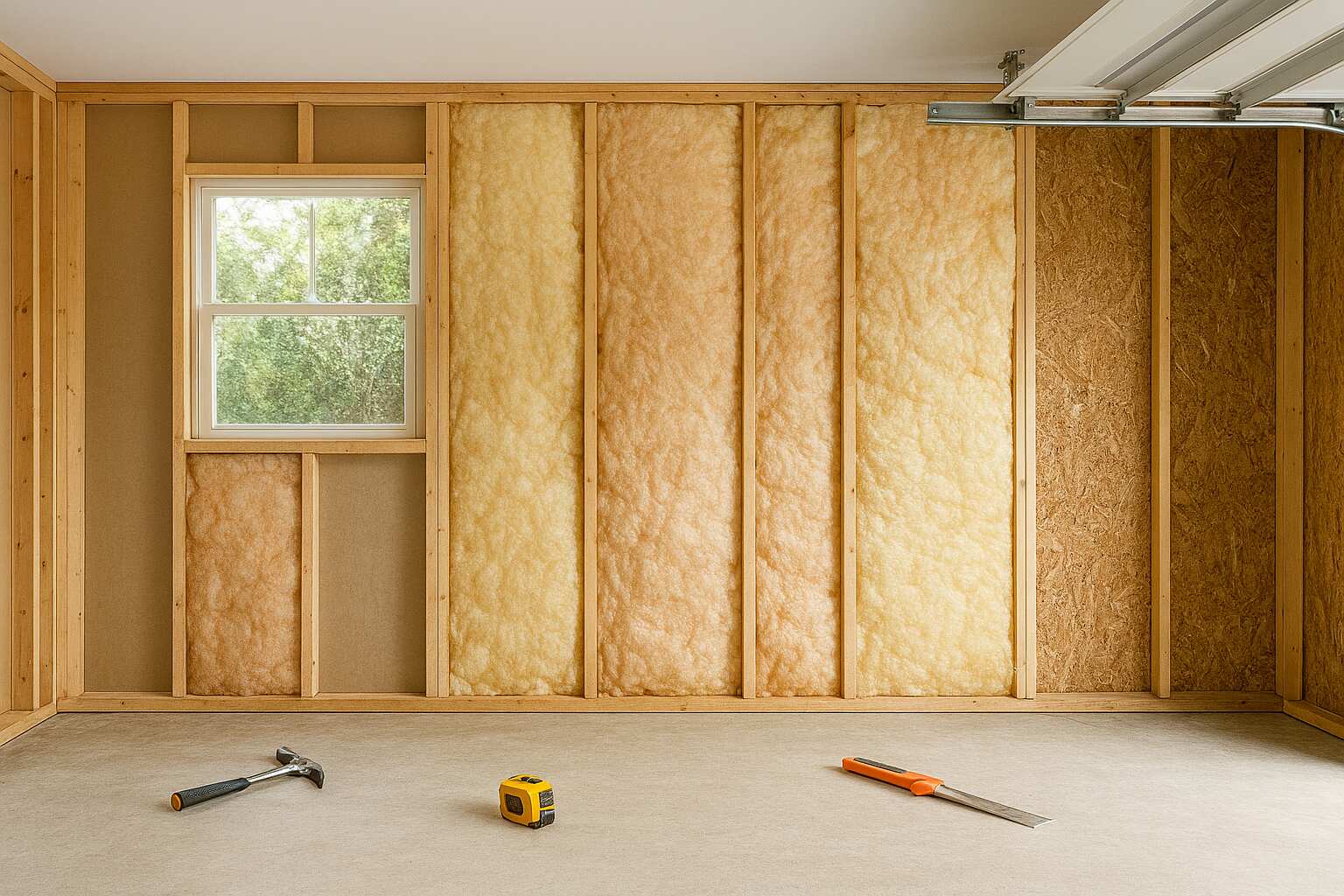
Most garages come with little to no insulation. Even if yours is attached to the house, chances are only the shared wall has any real insulation. Still, adding proper insulation to a garage can make a big difference, especially if you care about cutting down your energy costs.
A heated or cooled garage absolutely needs insulation to stay efficient. But even without a full HVAC setup, insulation can help reduce harsh temperature swings during hot summers and cold winters. It keeps the space more comfortable and protects anything you store inside.
The good news? Many homeowners can handle garage insulation on their own, depending on the layout and the type of insulation they choose. Below, you’ll find what it takes to insulate a garage, how much it usually costs, how different insulation materials compare, and the step-by-step process to get it done the right way.
Why It’s Important to Insulate Your Garage
Insulation plays a big role in keeping your garage usable year-round by blocking unwanted heat, cold, and moisture. If you’re looking to make your garage more comfortable and energy-efficient, adding proper insulation can deliver solid benefits:
Better comfort: Quality insulation helps regulate temperature and humidity, so your garage stays more comfortable through freezing winters and blazing summers.
Lower energy costs: By reducing heat loss through the walls, ceiling, and garage door, insulation helps your home use less energy, saving you money over time.
Less noise: Insulation also works as a sound barrier, making your garage quieter and reducing outside noise that can disrupt your space.
How Do I Prepare to Insulate My Garage?
If you’re planning to insulate your garage, the right materials and a little prep work will make the job a lot easier. You can choose the type of insulation that fits your space and budget, but you’ll still need to figure out how much of everything to buy. Use the tips below to estimate what you’ll need before heading to the store.
Tools You’ll Need
A few basic tools will help you get the job done smoothly. Keep a screwdriver, drywall screws, a utility knife, and a staple gun on hand.
Fiberglass Insulation
To estimate how much fiberglass insulation you need, measure the length of every wall, add those numbers together, and multiply by the height of your garage. That total gives you the square footage to cover. It’s smart to grab one extra bundle so you don’t run short. If you don’t use it, you can return it.
Garage Door Insulation
You can insulate the garage door with individual materials, but using a pre-made garage door insulation kit is usually easier and gives cleaner results.
Expanding Foam
Gaps, cracks, and small openings let outdoor air sneak inside, so sealing them is important. Expanding foam comes in low-expansion and high-expansion varieties. Pick the one that matches the size of the spaces you’re filling.
Drywall
When buying drywall, use the same measurement method you used for insulation. Measure the total wall area and grab a little extra to account for cuts or mistakes.
Protective Gear
Fiberglass can irritate your skin, so gloves, a mask, and long sleeves are a must. A little protection goes a long way.
How to Insulate a Garage: 6 Steps
Upgrading your garage insulation comes down to a few straightforward steps. Start by clearing out the walls so you have full access. Look over the area for cracks or gaps that could let in drafts. Once everything’s prepped, place your insulation securely, add drywall to close things up, and make sure the ceiling and garage door get proper insulation too. Each step plays a big role in boosting energy efficiency and overall comfort.
1. Prep the Walls Before You Start
Begin by clearing everything off the walls so you can work without obstacles. You’ll need full access to the framing before any insulation goes in.
-
Take down tools, shelving, hooks, and anything mounted to the wall.
-
If your garage has drywall, remove it so you can expose the studs. Renting a dumpster makes disposal simple.
-
Vacuum out dust and debris inside the stud cavities.
-
Check for mold or chemical spills, especially if you store gasoline, fertilizers, or paints. Hazardous materials should go to a local disposal center.
This prep work sets you up for a safe, clean insulation job.
2. Seal Any Gaps or Cracks
Before adding insulation, seal open gaps to block drafts and moisture.
-
Shake your can of expanding foam for a full minute.
-
Attach the straw and hold the can upside down while filling cracks.
-
Fill the gap halfway—foam expands on its own.
-
Let it sit for several minutes until tack-free. Full curing usually takes around eight hours.
A well-sealed wall improves the performance of your insulation and helps keep your garage more energy-efficient.
3. Install Fiberglass Batt Insulation
Once everything is sealed, you can start placing the insulation.
-
Staple the paper backing to the side of the stud, not the front, so drywall can be reinstalled later.
-
Use a straight piece of wood as a guide to trim insulation to the right length.
-
Cut any extra material with a sharp utility knife.
-
Tuck the insulation into the cavity and staple it neatly along the stud.
Proper installation helps prevent cold spots and keeps conditioned air where it belongs.
4. Reattach Drywall to Cover the Insulation
After the insulation is in place, close up the walls.
-
Use coarse-thread drywall screws for the best hold.
-
Apply construction adhesive and screw drywall directly into the studs.
-
Space screws roughly every 8 inches.
-
Always cover the insulation completely — exposed paper is a fire risk.
Drywall adds fire resistance, sound control, and a clean finished look.
5. Don’t Skip the Garage Ceiling
A lot of heat escapes through the ceiling, so this step is key for keeping your garage comfortable in every season.
-
Use thicker batt insulation, such as R-40.
-
Staple rafter vents to the rafters to maintain airflow.
-
Cut insulation to fit each cavity and push it in with the paper side down.
-
Continue across the entire ceiling, making sure there are no open gaps.
Pro Tip: Pre-cut your pieces before climbing the ladder. If you can, have someone hand you tools and insulation so you can stay balanced.
6. Insulate the Garage Door
The door is one of the biggest sources of heat transfer, so adding insulation here makes a noticeable difference.
-
Identify whether your door is steel, wood, or flat panel.
-
For steel doors, tuck flexible insulation or pre-cut foam board into the frame sections.
-
Wood frame-and-panel doors work best with rigid insulation cut to fit each recessed panel.
-
Flat doors pair well with foam board that you can glue or tape directly to the surface.
Keep in mind that adding insulation increases the door’s weight. In some cases, homeowners need new springs to keep the door balanced.
What Type of Insulation Should You Choose?
Different insulation materials work in their own way, so it helps to think about how your garage is built and what you want to achieve before choosing the right option.
For example, spray foam is a top pick if you’ve turned your garage into a living space or home office because it seals tight and boosts energy efficiency. On the other hand, double-bubble insulation works great in metal garages where moisture control is a priority. Each type brings its own benefits, so matching the insulation to your garage’s needs will give you the best results.

All insulation materials come with an R-value, which tells you how well they hold heat. Higher numbers mean better insulation. While R-values can reach up to R-60, most garage exterior walls perform best with insulation rated between R-13 and R-20.
Below is a simple breakdown of the most common garage insulation options and how they work:
Fiberglass batts: One of the most popular choices for garages. These pre-cut batts fit between wall studs and ceiling joists. They’re budget-friendly and easy to work with for most homeowners.
Woven insulation: Built from layers of foil, bubble, and woven materials. This type is great for metal garages because it helps control temperature and is often paired with radiant barriers for better energy efficiency.
Cellulose: A loose-fill material made from recycled paper products. It’s an eco-friendly option that can be blown into wall cavities to help reduce heat loss and improve sound control.
Rigid foam panels: These foam boards offer a higher R-value per inch than many other materials. They’re ideal for exterior walls, roof undersides, and even garage door insulation.
Spray foam: A high-performance insulation that expands to fill gaps and seal air leaks. Open-cell spray foam is more affordable, while closed-cell spray foam provides better moisture control and a higher R-value—great for garages that double as living or workspace.
Double bubble insulation: Often called reflective insulation, this material uses bubble wrap sandwiched between foil layers. It helps reduce condensation on metal surfaces and adds a layer of radiant heat protection.
Because every garage is built differently, there’s no single “right” insulation for everyone. Think about your garage structure, how much DIY work you’re willing to do, and what benefits matter most, whether it’s temperature control, moisture resistance, or energy savings. This will help you pick the insulation that fits your space perfectly.
| Insulation Type | Best For | Typical R-Value Range | Pros | Cons |
|---|---|---|---|---|
| Fiberglass Batts | Stick-built garages with open studs | R-11 to R-19 | Affordable, widely available, fits standard stud spacing, good for basic temperature control | Can irritate skin/lungs, loses performance if wet, may attract mold, gaps reduce effectiveness |
| Cellulose (Blown-In) | Stick-built garages, attics, unfinished walls | R-3.2 to R-3.8 per inch | Eco-friendly, great for filling irregular cavities, excellent soundproofing, fire-resistant | Can settle over time, tricky to install in finished walls, may hold moisture if not sealed properly |
| Rigid Foam Panels (XPS/EPS/Polyiso) | Unfinished walls, garage doors, ceilings, metal surfaces | R-4 to R-6.5 per inch | High R-value per inch, great air barrier when sealed, reduces noise, cuts easily for custom fit | Needs precise installation, some types absorb moisture, must often be covered with drywall for code |
| Spray Foam (Open & Closed Cell) | Converted garages, workshops, conditioned spaces | Open-cell: R-3.5 to R-4 per inchClosed-cell: R-6 to R-7 per inch | Excellent air sealing, expands to fill gaps, boosts structural strength, top-tier energy savings | Closed-cell is expensive, can trap moisture on metal, requires pro installation, irreversible once applied |
| Double Bubble (Reflective Insulation) | Metal garages, pole barns, garages with condensation issues | R-1 to R-1.5 (radiant barrier effect increases real-world performance) | Great for moisture control, easy to install, works well with radiant heat reflection, cost-effective | Not strong enough for temperature control by itself, low actual R-value |
| Woven / Foil-Backed Insulation | Metal garages and workshops | R-3 to R-6 (varies by layers) | Helps regulate temperature, reflects heat, pairs well with radiant barriers, lightweight | Offers limited soundproofing, may need extra insulation for true climate control |
How Much Does It Cost to Insulate a Garage?
Insulating your garage can cost anywhere from $0.50 to $3 per square foot, depending on the walls, ceiling, and the type of material you choose. For homeowners working on a tight budget, a simple DIY project may only run a few hundred dollars. But if you prefer to bring in a pro, the price can climb into the thousands especially for materials that take more skill to install.
Your total cost mainly depends on two things: garage size and insulation type. Some materials are easier and cheaper to work with, while others like spray foam require more labor, equipment, and experience.
Here’s a quick breakdown of common garage insulation materials and their typical cost per square foot:
-
Fiberglass Batt: $0.30–$1.50/sq.ft.
-
Double-Bubble Insulation: $0.40–$0.65/sq.ft.
-
Foam Board: $0.60–$2.00/sq.ft.
-
Woven 17: $0.70–$0.90/sq.ft.
-
Spray Foam: $1.65–$3.80/sq.ft.
To help you picture real-world pricing, many installers will compare the costs of insulating a 1-car garage or 2-car garage using two popular options: fiberglass for standard wood-frame garages and double-bubble insulation for metal garages. This gives homeowners a clearer view of what to expect before starting the project.
| Type of Garage | Garage Dimensions (Ft) | Wall Height (Ft) | Estimated Insulatable Area (Sq.Ft.)* | Insulation Type | Avg. Cost per Sq.Ft. | Estimated Total Cost |
|---|---|---|---|---|---|---|
| 1-Car Wooden Garage | 12’ x 25’ | 10’ | ~740 sq.ft. | Fiberglass Batt | $0.30–$1.50 | $1,290 |
| 1-Car Metal Garage | 12’ x 25’ | 10’ | ~740 sq.ft. | Double-Bubble | $0.40–$0.65 | $1,540 |
| 2-Car Wooden Garage | 24’ x 25’ | 10’ | ~1,240 sq.ft. | Fiberglass Batt | $0.30–$1.50 | $1,910 |
| 2-Car Metal Garage | 24’ x 25’ | 10’ | ~1,240 sq.ft. | Double-Bubble | $0.40–$0.65 | $2,270 |
These figures are rough estimates for DIY insulation. If you prefer hiring a professional, expect the cost to rise by around $2,000 for a 1-car garage and about $3,000 for a 2-car garage. Professional installation ensures proper insulation, saves time, and can improve energy efficiency, making it a worthwhile investment for many homeowners.
Conclusion
A properly insulated garage provides more than just comfort. It saves energy and protects your belongings. It also makes the space more functional year-round. With guidance from Wecycle, you can find the right materials and solutions for an efficient and eco-friendly insulation project. Transform your garage today with Wecycle.
FAQs
What is the best way to insulate a garage?
The best method depends on your garage type and climate. Common options include fiberglass batts, spray foam, and rigid foam boards. Professionals like Wecycle can help choose the most effective solution.
How much does it cost to insulate a garage?
DIY insulation can range from $500 to $2,000 for a 1-car garage and $800 to $3,000 for a 2-car garage. Hiring a professional can increase costs but ensures better results and energy efficiency.
Can I insulate my garage walls and ceiling myself?
Yes, DIY insulation is possible if you have basic tools and skills. Fiberglass batts or foam boards are easier for DIY projects. For more complex setups, professional help is recommended.
Will garage insulation reduce my energy bills?
Yes. Proper insulation helps maintain temperature, reducing heating and cooling costs. It also makes the garage more comfortable for projects or storage.
How long does garage insulation last?
High-quality insulation can last 20–30 years if installed correctly and kept dry. Regular checks and maintenance help preserve its effectiveness over time.
Sabbir Kabir is a content manager at WeCycle with over 5 years of experience in creating content about junk removal services, eco-friendly waste disposal, and sustainable recycling practices. Passionate about promoting environmental responsibility, Sabbir shares actionable insights to help homeowners and businesses adopt greener, cleaner waste management solutions.
Read our latest blog posts

Need junk gone fast? See pricing in your area
Enter your zip code to see if Wecycle operates in your location.