BLOG / HOW TO
How to Dispose of Tree Branches the Right Way

Staring at a pile of tree branches and wondering how to dispose of tree branches without turning it into a full weekend job? You’re not alone.
A little trimming or a sudden storm can quickly leave your yard messy and hard to use. Those branches take up space, attract pests, and make everything feel unfinished. Ignoring them only makes the problem worse, and tossing them anywhere can lead to trouble.
The good news is you don’t have to guess or stress. There are simple, legal ways to clear them out and get your yard back. This guide walks you through the easiest options step by step.
How to Dispose of Tree Branches: Best 8 Options for Homeowners
Got branches piling up in your yard and not sure what to do next? Many homeowners feel stuck once the cleanup is done and the mess is still there. Dragging branches to the trash rarely works, and leaving them outside only makes an awkward situation.
On top of that, local rules can make things confusing. The good news is you do not have to guess or stress. There are simple, allowed ways to clear tree branches and get your space back without turning it into a bigger job.
1. Curbside Yard Waste Pickup (Most Convenient)
Curbside yard waste pickup makes branch disposal simple. Before cutting, wear gloves and safety glasses to protect your hands and eyes. Use a sharp saw and cut branches into short pieces that meet city size limits.
Keep your footing steady and cut away from your body. Tie the branches together with twine so they stay neat and easy to lift. Place the bundles at the curb on the correct pickup day.
Do not set them out too early or too late. This option works best for small to medium piles after trimming or light storm cleanup.
2. Drop-Off at a Yard or Green Waste Facility
A yard or green waste facility is a good option if branches are already cut or removed. This often happens after tree trimming, storm cleanup, or professional yard work.
Load the branches into a truck or trailer and make sure they stay secure during the drive. Check the facility hours before heading out, since many locations close early or follow seasonal schedules.
Some facilities accept branches for free, while others charge a small fee. Follow the signs when you arrive and unload in the marked area. This option works well for large piles and keeps yard waste out of landfills.
3. Mulch or Compost the Branches
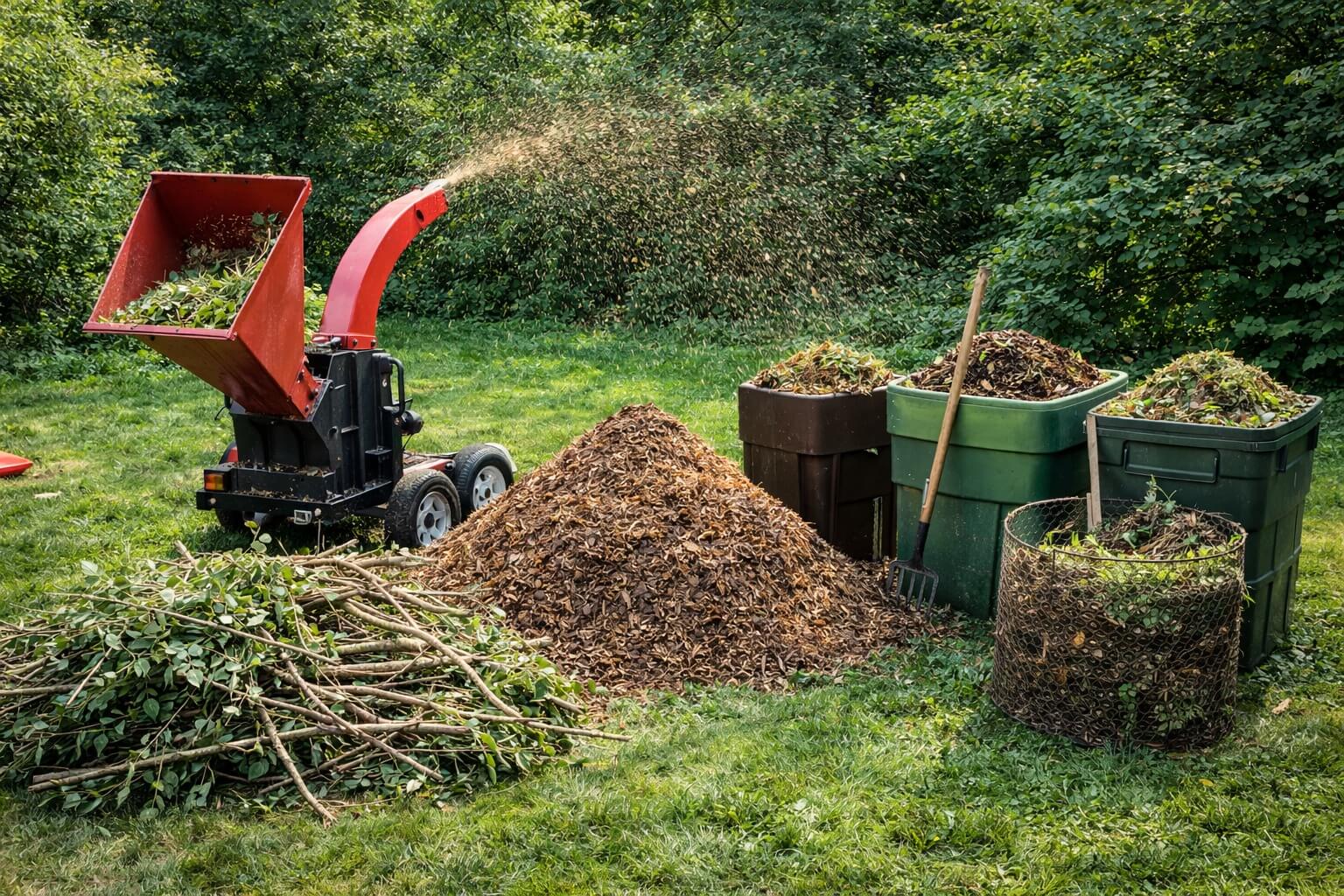
Mulching or composting works well for small tree limbs and twigs. You can place small branches into a home chipper or ask a garden service to chip them for you.
Use the mulch around plants, trees, or garden beds to hold moisture and control weeds. For composting, break branches into small pieces and mix them with leaves and grass clippings. This helps the pile break down faster.
Avoid thick or hard limbs, since they take too long to decompose. This option suits gardeners who want to reuse yard waste and keep their outdoor space healthy and clean.
4. Reuse or Give Away Usable Wood
Reusable wood gives tree branches a second life. Straight and dry branches work well for firewood, small DIY builds, or simple crafts.
Stack usable pieces in one place and remove rotten or soft wood. Post the wood online for free pickup through local groups or community boards. Add clear details like branch size and pickup time. People often look for free wood, especially during colder months.
This option clears your yard without lifting heavy loads. It also keeps wood out of landfills and helps someone else at the same time. Reuse works best when branches stay clean and easy to handle.
5. Burn Branches (Only Where Allowed)
Burning branches works only in areas that allow open burning. Check your local burn laws before you start. Many cities ban this option or limit it to certain seasons.
Choose a calm day with no wind to avoid spreading fire. Clear the area around the burn spot and keep water or a hose nearby. Burn only dry, clean branches and avoid treated or painted wood. Never leave a fire unattended.
This option suits rural areas more than cities. If local rules do not allow burning, choose another disposal method to avoid fines or safety risks.
6. Rent a Wood Chipper or Hire a Tree Service
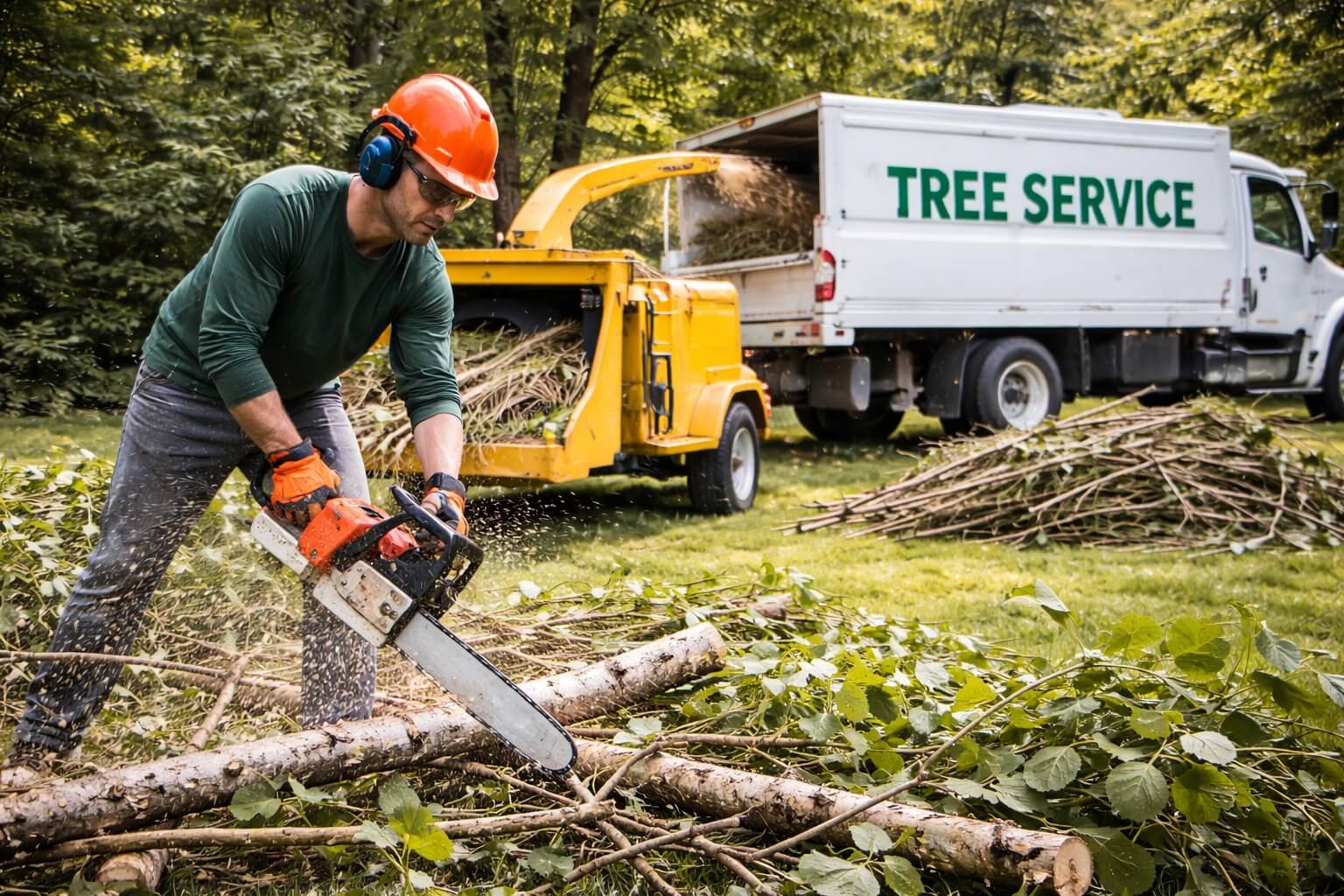
Thick or heavy branches need stronger tools and extra care. Renting a wood chipper helps turn large limbs into mulch fast. Rental costs often range from $100 to $300 per day, based on machine size.
Wear gloves, eye protection, and sturdy shoes when using it. Feed branches slowly and keep your hands clear. If the job feels too big, hire a tree service. Tree services usually charge $300 to $1,000, based on branch size, volume, and access.
This option costs more than basic disposal, but it saves time and lowers risk. It works best after storms, tree removal, or major yard cleanup projects.
7. Rent a Dumpster (Best for Steady Cleanups)
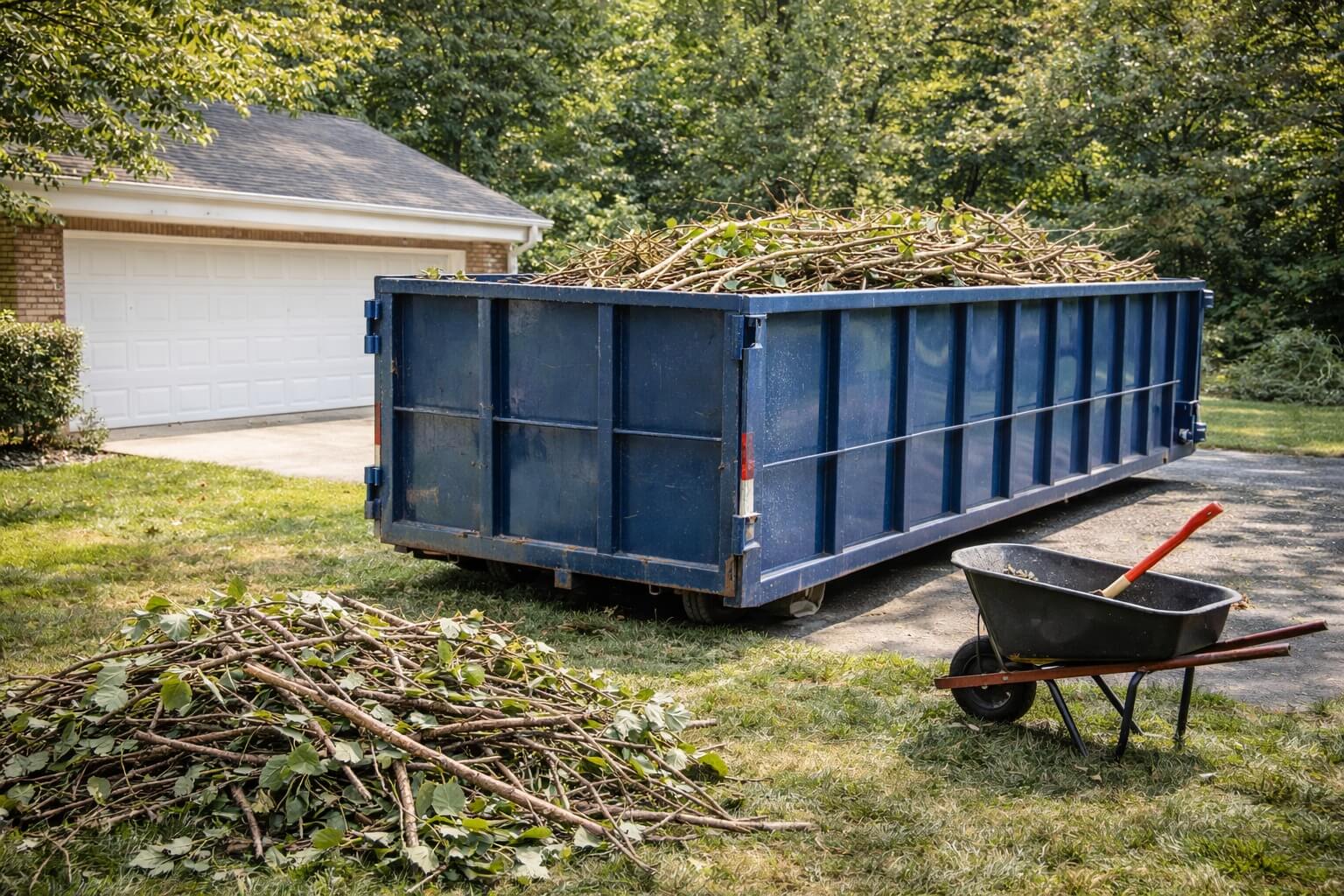
For storm damage or major yard work, renting a dumpster works well. This option fits homeowners who want to clean at their own pace.
Place the dumpster on your driveway or another clear space. Toss branches inside as you go, without bundling or stacking. This helps during tree trimming disposal, and large cleanups. Dumpster rental costs usually range from $250 to $500, based on size and rental time.
Plan delivery and pickup dates in advance. Make sure you have enough space for placement. This method handles heavy loads and simplifies tree debris removal without repeated trips.
8. Hire a Junk Removal Service (Fastest Option)
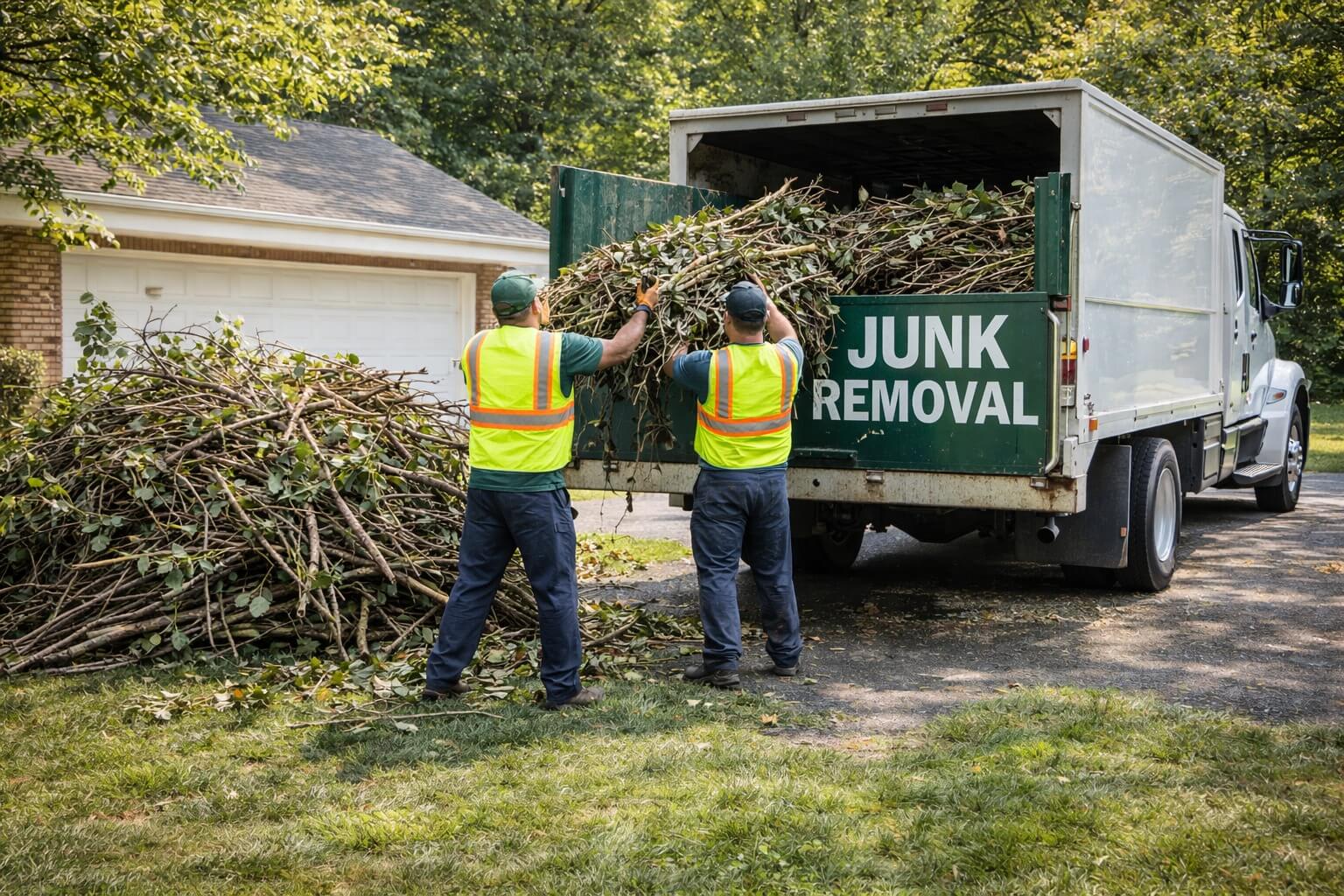
Hiring a junk removal service gives you the quickest way to clear tree branches. You do not need to cut, lift, or haul anything. The crew arrives, loads the branches, and cleans the area.
This option answers the common question of who picks up tree branches without extra work. Services handle small piles, large limbs, and even tree trunk disposal.
Many companies offer same-day or scheduled pickup. Prices usually range from $150 to $600, based on pile size, weight, and access. This method suits older homeowners, busy schedules, and anyone who wants fast results without effort.
Also Read: 8 Easy Ways to Get Rid of Yard Waste in 2026
Conclusion
Got a small pile of branches? Curbside pickup or composting usually works best. These options cost little and keep things simple. Dealing with a large cleanup after storms or heavy yard work? A dumpster, tree service, or junk removal company can handle the load fast and safely.
Many homeowners also ask where I can dump tree branches for free. Local yard waste or green waste facilities often accept branches at no cost. Always check local rules before disposal.
Choose recycling or reuse when possible. Smart hauling tree branches choices save time, protect your yard, and keep waste out of landfills.
FAQs About How to Dispose of Tree Branches
How to dispose of tree branches the right way?
The best method depends on pile size and local rules. Small piles fit curbside pickup. Large piles need a dumpster, facility drop-off, or removal service.
Is it possible to recycle tree branches?
Yes. Many cities recycle branches into mulch or compost through yard waste pickup or green waste facilities.
Can I throw branches or yard waste in the trash?
No. Branches make trash bins too heavy and often break local waste rules. Yard waste programs work better.
Is it illegal to dump garden waste?
Yes. Dumping branches in open areas can lead to fines. Always use approved disposal options.
Where can I dump tree branches for free?
Some green waste facilities and curbside yard waste programs accept branches at no cost.
Who should I call for heavy or large branch piles?
Call a junk removal or tree service. They handle lifting, loading, and hauling safely.
Shushmita Karmakar is an experienced content writer at Wecycle, with over 3 years of expertise creating clear, helpful, and SEO-focused content. She specializes in writing about junk removal, recycling, and sustainable waste solutions, helping readers make informed, eco-friendly choices. Her work combines practical insights with an easy-to-read style that connects with both homeowners and businesses.
Read our latest blog posts



Need junk gone fast? See pricing in your area
Enter your zip code to see if Wecycle operates in your location.