BLOG / PRICING
How Much Does Pool Removal Cost in 2026
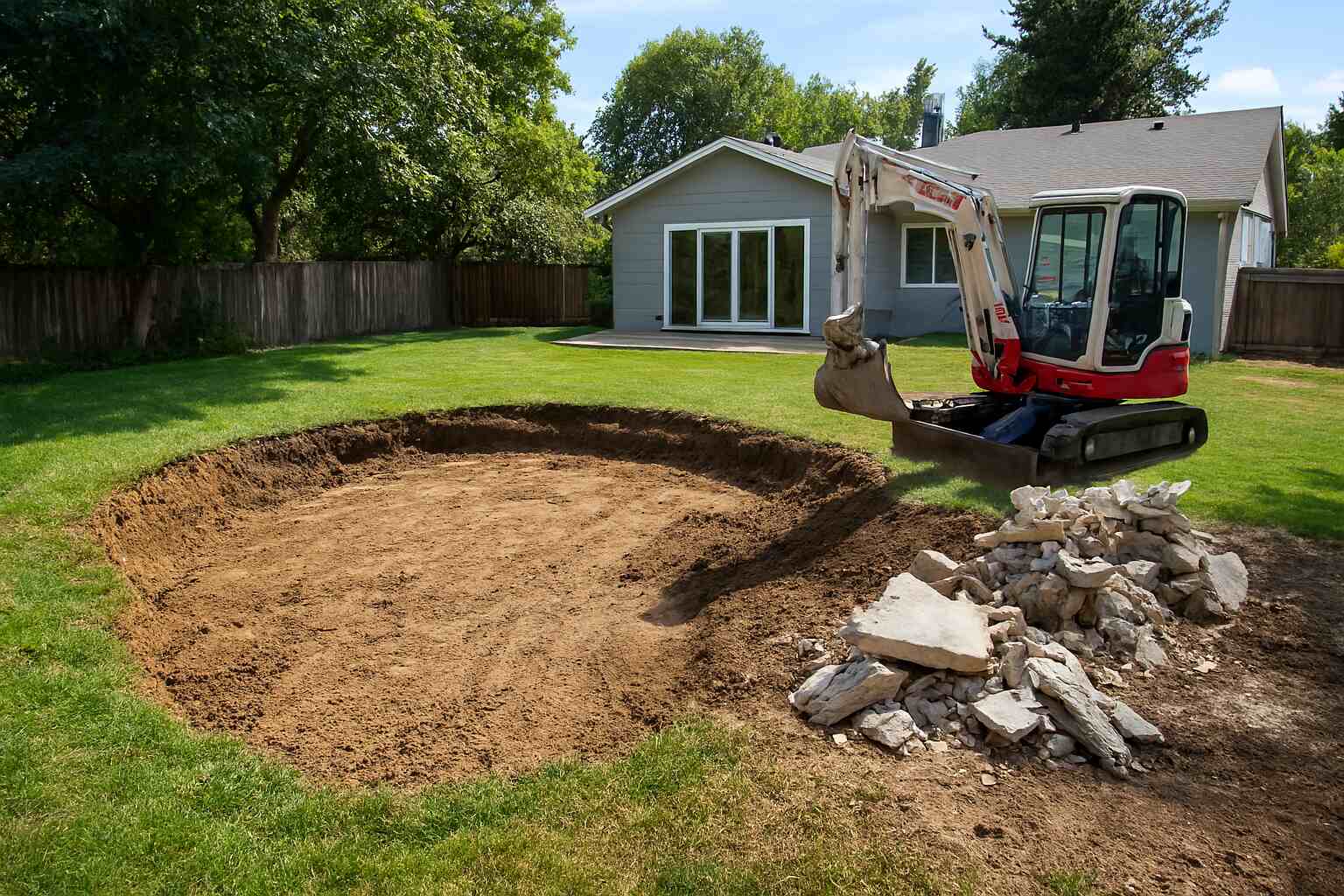
Pool removal costs vary a lot from one home to another. Most homeowners spend around $6,000 but the total can shift depending on the type of pool. Above-ground pool removal can cost as little as $300-$400, while a full in-ground removal can reach $15,000. The process involves breaking apart the pool, hauling away the debris, and filling the space with proper backfill so the area stays solid for future use.
This guide explains the key cost factors like pool type, size, access, permits, labor rates, and disposal fees, so you get a clear idea of what your project may cost. A well-planned approach helps you avoid surprises and choose the best option for your yard and budget.
Type of Demolition
The cost of removing or refilling a swimming pool varies depending on the method used. The pool can be totally demolished or partially broken up before it is filled in.
| Type of Pool Removal | Average Cost Range | Best For | Key Advantages | Key Drawbacks |
|---|---|---|---|---|
| Full Pool Removal (Complete Demolition) | $5,000–$18,000 | Homeowners planning future construction, landscaping, or selling the home | • Fully removes all pool materials • Safest option for long-term landscaping or building • No risk of sinkage or drainage problems • Improves property value and appeal | • Higher cost • Requires more labor and heavy equipment • Permit and inspection requirements may be stricter |
| Partial Pool Removal (Fill-In Removal) | $3,000–$12,000 | Homeowners looking for a quicker, lower-cost solution with no future building plans | • Faster project timeline • Lower overall cost • Works well when no future structures will occupy the space | • Illegal or restricted in many cities • Leaves pool components underground • Higher risk of ground settling, drainage issues, or landscaping limitations • Must disclose partial removal when selling the home, which can reduce resale value |
How Pool Size Affects Your Removal Cost
Pool size plays a major role in how much you’ll pay for removal. Larger pools naturally require more labor, equipment, and disposal time, which drives up the price. But size isn’t the only factor. A small pool with a complicated layout can sometimes cost more to remove than a larger, simple design. Features like built-in steps, attached spas, waterfalls, thick concrete walls, or large surrounding decks can also raise costs.
Most contractors charge around $12–$15 per square foot for pool removal, depending on the type of demolition, soil conditions, disposal fees, and how easy it is to access the yard.
Below is a more detailed cost breakdown based on common pool dimensions, plus added notes to help homeowners understand what influences each price range.
| Pool Dimensions (Feet) | Estimated Square Footage | Average Removal Cost | What This Usually Includes |
|---|---|---|---|
| 6 × 8 | 48 sq ft | $600–$750 | Basic removal for very small or plunge-style pools; minimal debris and quick demo time. |
| 8 × 10 | 80 sq ft | $1,100–$1,400 | Suitable for compact backyard pools; may include light concrete breaking. |
| 8 × 12 | 96 sq ft | $1,800–$2,300 | Often includes concrete, liner, or fiberglass removal plus hauling fees. |
| 8 × 20 | 160 sq ft | $900–$1,500 | Narrow lap-style pools; cost varies based on deck removal and access. |
| 12 × 20 | 240 sq ft | $2,800–$3,500 | Standard-sized residential pool; may require more heavy equipment. |
| 16 × 32 | 512 sq ft | $6,500–$7,500 | Full in-ground demolition with larger concrete shells and deeper excavation. |
| 18 × 36 | 648 sq ft | $8,000–$9,500 | Larger family pools often include deck removal, regrading, and soil compaction. |
| 20 × 40 | 800 sq ft | $10,000–$12,000 | Major removal project; typically includes heavy debris loads and extensive backfill. |
Calculate Your Junk Removal Cost
CalculatorPool Removal Cost by Type
The type of pool you own plays a major role in the total removal cost. Above-ground pools come out quickly and require far less labor, while in-ground pools need heavy equipment, skilled operators, and proper backfilling to make the land safe for future use. Here’s a clear breakdown of what to expect.
Above-Ground Pool Removal
Above-ground pool removal usually falls on the lower end of the price spectrum. Most homeowners pay $400–$900, depending on the pool’s size, the condition of the frame, and whether you need the base sand excavated. The job often wraps up in just a few hours. Some contractors even offer a discount if the metal frame can be recycled.
In-Ground Pool Removal
In-ground pools require a much more involved process. Partial removal typically costs $3,000–$11,000, while a full removal can run $5,000–$18,000. Full removal makes the property more stable and safer for future construction. Both methods involve breaking up concrete or fiberglass, hauling away debris, and replacing the pool space with compacted fill dirt.
Average Pool Removal Costs by Pool Type
| Pool Type | Average Removal Cost Range | Project Timeframe | Key Notes |
|---|---|---|---|
| Above-Ground | $400–$900 | 2–6 hours | Quick removal, possible recycling credit, extra cost if sand base needs excavation |
| In-Ground | $3,000–$18,000 | 1–5 days | Costs vary based on partial vs. full removal, debris volume, soil needs, and yard access |
In-Ground Pool Removal Costs by Size
Here is an improved table with clearer cost expectations and added insights for both partial fill-ins and full removals.
| Pool Size (Feet) | Partial Fill-In (Avg. Cost) | Full Removal (Avg. Cost) | Project Complexity | What Affects Pricing Most |
|---|---|---|---|---|
| 10 × 20 | $2,100–$6,500 | $4,500–$11,200 | Low | Easy access, minimal debris |
| 12 × 24 | $2,400–$8,000 | $4,800–$12,000 | Moderate | Soil requirements, concrete thickness |
| 14 × 28 | $2,500–$8,200 | $5,000–$13,200 | Moderate | Excavation depth, hauling distance |
| 15 × 30 | $2,600–$8,600 | $5,200–$13,900 | Moderate–High | Material disposal fees |
| 18 × 36 | $3,000–$9,700 | $5,800–$15,600 | High | Heavy machinery needs |
| 20 × 40 | $3,200–$10,800 | $6,300–$16,800 | High | Extra fill dirt and compaction labor |
| 30 × 50 | $4,300–$15,200 | $8,200–$23,000 | Very High | Extended labor time, large debris volume |
Pool Removal Cost by Material
The material your pool is made of plays a huge role in the final removal cost. Some materials break down easily, while others require heavy machinery, extra labor, or strict disposal steps. Concrete and gunite usually drive the highest costs because contractors need more time and equipment to break them apart. Fiberglass and vinyl also come with special requirements that affect the total price.
Here’s a detailed breakdown of the most common pool materials and what homeowners typically pay to remove them.
| Pool Material | Typical Cost Range | Removal Type Required | Why Costs Vary |
|---|---|---|---|
| Concrete | $3,000–$16,000 | Partial or full removal | Thick structure, heavy breaking, more labor and disposal |
| Gunite | $3,000–$16,000 | Partial or full removal | Dense, reinforced material; harder to break apart |
| Fiberglass | $5,000–$15,000 | Full removal only | Shell may come out in one piece or may need cutting |
| Vinyl | $3,000–$11,000 | Full removal only | Liner removal is easy, but the backing and framing need inspections |
Vinyl Pool Removal
Vinyl-lined pools usually cost $3,000–$11,000 to remove. Contractors can take out the liner quickly, but the real cost comes from the structure underneath. Since you can’t do a partial fill-in, the entire frame must be removed. Many areas require an engineer’s inspection to make sure the backing is stable before demolition starts.
Fiberglass Pool Removal
Fiberglass pool removal runs $5,000–$15,000. The fiberglass shell must come out completely. When it lifts out in one piece, the job stays on the lower end of the range. If the shell cracks or needs cutting into sections, disposal and labor costs increase.
Concrete Pool Removal
Concrete pools fall between $3,000 and $16,000, depending on whether you do a partial or full removal. Concrete is tough to break apart and requires heavy equipment. Contractors often crush the concrete and mix the rubble with soil to fill the cavity, which helps control costs.
Gunite Pool Removal
Gunite, a spray-applied form of concrete, also costs $3,000–$16,000 to remove. It’s dense and long-lasting, so contractors follow a similar process to concrete removal. The extra strength of gunite often affects labor time, which pushes the cost toward the higher end.
Learn More: Above Ground Pool Removal Cost: Pricing Guide
Pool Removal Labor Costs Explained
Labor makes up a big part of your total pool removal price. Most homeowners spend $1,000 to $3,000 on labor alone, but the final number depends on the pool’s material, size, access, and whether you choose a full or partial removal. Concrete pools take more time and heavier equipment, so labor costs sit near the top of the range. Vinyl pools usually fall on the lower end because the material cuts and removes more easily.
Some cities require a licensed engineer to monitor the demolition and backfilling process. The engineer confirms proper soil compaction, drainage, and long-term stability especially if you plan to build on the area later. Structural engineers typically charge $100 to $200 per hour, and the total depends on how many site visits and inspections your local codes require.
Pool Removal Costs by Location: What Homeowners Typically Pay
Pool removal prices differ across the country, and your location plays a big role in what you’ll spend. Areas with higher labor rates, strict permit rules, or tough soil conditions usually see higher removal costs. On the other hand, states with lower labor costs or easier excavation conditions often fall on the cheaper end.
Below is an upgraded table that not only shows the average state cost but also adds value by including cost drivers and what homeowners can expect in each region.
| State | Average Cost Range | Common Cost Drivers | What Homeowners Can Expect |
|---|---|---|---|
| California | $3,500–$8,000 | High labor, strict permitting, environmental rules | Longer approval times and higher pricing in major cities |
| Texas | $3,500–$7,500 | Varies by region, high summer heat | Lower prices in rural areas; higher in big metros |
| Florida | $3,900–$4,200 | Sandy soil, high volume of pool projects | Faster and smoother excavation |
| New York | $5,000–$9,000 | High labor rates, strict codes | NYC-area costs significantly higher |
| Illinois | Around $6,000 | Strict inspections, higher labor costs | Higher rates in Chicago and nearby suburbs |
| Pennsylvania | $4,000–$7,000 | Mixed soil conditions, variable permits | Prices vary widely between rural and urban regions |
| Ohio | $4,000–$6,500 | Clay soil, freeze cycles | Extra compaction steps may increase cost |
| Georgia | $3,200–$6,000 | Mixed soil, moderate labor | Fair pricing and flexible scheduling |
| North Carolina | $3,500–$6,000 | Seasonal demand, moderate labor | Steady pricing most of the year |
| Michigan | $3,000–$9,000 | Freeze-thaw cycle, soil differences | Wide price range based on soil and season |
| Arizona | $3,000–$7,000 | Hard desert soil, extreme heat | Best pricing during cooler months |
| New Jersey | $4,500–$8,000 | High labor, strict permitting | Urban/suburban areas see top-end rates |
| Virginia | $4,000–$6,500 | Mixed soil, permit rules | Smooth process with stable pricing |
| Washington | $4,500–$8,000 | Rainfall, environmental regulations | Added drainage prep may increase cost |
| Colorado | Around $7,000 | Rocky soil, tough excavation | Higher equipment and labor requirements |
| Tennessee | $3,500–$6,000 | Clay-heavy soil, moderate labor | Affordable removal with steady timelines |
| Massachusetts | $4,500–$6,000 | High labor, strict local codes | Boston suburbs see higher pricing |
| Maryland | Around $4,200 | Permit regulations, moderate labor | Higher costs near D.C. regions |
| Minnesota | Around $6,000 | Frozen ground in winter | Most work scheduled spring–fall |
| Indiana | Around $4,800 | Moderate soil and labor | Consistent pricing year-round |
Read Also: How Much Does Junk Removal Cost
Additional Costs to Consider
Pool removal isn’t just about demolition and hauling debris. Depending on your project, several additional expenses can affect your final bill. Knowing these ahead of time helps you plan your budget more accurately and avoid surprises. Always check with your local pool removal contractor before starting the job, they can give a precise estimate for your situation.
Pool Draining or Emptying
Before removal begins, your pool must be closed and fully drained. This process typically takes about 24 hours and costs around $175, depending on the size of your pool.
Money-Saving Tip: You can drain the pool yourself by renting a small pump from a local home improvement store for $40–$70.
Always check local regulations before draining. Some municipalities allow pool water to drain directly into the yard or street without a permit, while others may require official approval. If a permit is needed, it’s best to let a professional handle it to avoid fines.
Choosing Fill Material
After the pool is drained, the empty space must be filled. The cost and method will vary depending on the type of fill material you use. A structural engineer should ideally oversee the process to ensure proper settling and drainage.
| Fill Material | Cost per Cubic Yard | Pros | Cons | Best Use |
|---|---|---|---|---|
| Gravel | $5–$8 | Low cost; good for a base layer | Doesn’t compact well; may form sinkholes; unsuitable for building on | Base layer under dirt or landscaping |
| Dirt | $8–$12 | Provides solid fill; supports landscaping | May require mixing with gravel for better compaction | Full pool fill; top layer for lawn or garden |
| Broken Concrete | Varies | Recycles old pool material; adds stability | Expensive; heavy | Partial pool removal; mixed with dirt for added fill |
Accessibility
Heavy machinery like excavators is required for pool removal. If your property is difficult to access, removal time and costs may increase. To save money:
-
Remove or temporarily relocate fences, pool enclosures, and outdoor playsets.
-
Clear pathways for machinery to reduce labor time.
Permits and Inspections
Depending on your area, you may need permits for pool removal, which can cost around $200. Most contractors include permit handling in their flat-rate quote, but it’s smart to confirm with your local building department. This ensures all legal steps are properly followed.
Deck Removal
Many pools have surrounding decks that need to be removed as part of the project. Expect to pay $2–$5 per square foot, depending on the material:
-
Concrete or pavers – tend to be more expensive
-
Wood decks – generally more affordable
Pro Tip: By planning ahead, checking local rules, choosing the right fill material, clearing the area, and understanding deck removal costs, you can save money and avoid delays during your pool removal project.
Pool Fence and Enclosure Removal
In some states or municipalities, a pool fence or enclosure is required by law. The cost to remove these structures depends on size and material:
-
Standard pool fence: $800 – $2,000
Higher-end pricing applies to larger fences or stronger materials like steel or structural aluminum. -
Large pool enclosure (e.g., pool cage, full glass enclosure): $5,000 or more
Disposal Fees
After removing a pool, you’ll also need to consider debris disposal. Disposal costs generally range from $150 to $500, depending on factors like:
-
Size and weight of debris
-
Dumping fees at local landfills
-
Number of trips required for removal
Tip: You may reduce disposal costs by handling dumpster rental yourself instead of relying on the contractor.
Common Pool Removal Add-Ons
Homeowners often combine pool removal with other improvements. Here’s a breakdown of typical add-on costs:
| Add-On Service | Average Cost Range | Notes / Value |
|---|---|---|
| Wooden Deck Removal | $1,000 – $2,000 | Depends on deck size and material |
| Electrical Component Removal | $75 – $150 per hour | Includes pool lighting, pumps, or wiring |
| Paver or Concrete Patio Removal | $1,000 – $2,000+ | Larger patios can cost more |
| Soil Compaction | $250 – $1,000 | Prepares ground for landscaping or new installation |
| Seeding | $0.10 – $0.20 per sq. ft | Affordable option to restore lawn |
| Sod Installation | $1.50 – $3.00 per sq. ft | Faster lawn restoration with immediate results |
| Professional Landscaping | $100 – $200 per hour | Ideal for redesigning yard after pool removal |
Pool Removal vs. Pool Remodeling
If you own an older pool, deciding between removing it entirely or remodeling it can be a tough choice. Both options come with unique benefits, drawbacks, and costs. Here’s a clear breakdown to help you make an informed decision.
Pool Removal: Pros and Cons
Pool removal involves demolishing your existing pool structure and filling in the space, which may include landscaping to restore your yard. Depending on your needs, you can choose either a full or partial removal.
Advantages
-
Lower Ongoing Costs: No more maintenance, chemicals, filtration, or repair expenses.
-
Reclaim Yard Space: Turn the old pool area into a patio, garden, or play area.
-
Simplifies Outdoor Maintenance: Less yard work and fewer safety concerns, especially if you have children or pets.
Disadvantages
-
Higher Upfront Cost: Full pool removal is typically more expensive than partial removal.
-
Time-Consuming: The demolition and cleanup process can take several days.
-
Potential Property Impact: Removing a well-maintained pool may decrease your home’s value, particularly in neighborhoods where pools are desirable.
| Pros | Cons | Additional Considerations |
|---|---|---|
| Reduced maintenance and long-term costs | Time-consuming process | Requires professional contractors for safe removal |
| Extra usable outdoor space | Can lower home value in certain markets | Landscaping costs can add to the overall expense |
| Eliminates safety risks | High initial cost for full removal | Permits may be required depending on local regulations |
Pool Remodeling: Pros and Cons
Pool remodeling focuses on upgrading your existing pool to improve its aesthetics, safety, or efficiency. Common renovations include resurfacing, retiling, modernizing features, and installing energy-efficient systems.
Advantages
-
Modern Appearance: Makes your pool look fresh and updated.
-
Boosts Property Value: Enhances the overall appeal of your home.
-
Customizable Upgrades: You can improve safety features, energy efficiency, or functionality.
Disadvantages
-
High Initial Cost: Extensive renovations can be expensive.
-
Time-Intensive: Larger remodels can take several weeks to complete.
-
Ongoing Maintenance: While updated, the pool still requires regular upkeep.
| Pros | Cons | Additional Considerations |
|---|---|---|
| Improved aesthetics and pool functionality | High initial cost | Remodeling allows selective upgrades, focus on what matters most |
| Can increase property value | Time-consuming | May require professional design and installation for optimal results |
| Opportunity to add energy-efficient features | Maintenance still required | Some upgrades may offer long-term savings (e.g., LED lighting, efficient pumps) |
Why Hiring a Professional for Pool Removal Is Worth It
Removing a pool might seem like a project you could tackle yourself, especially if you’re looking to save $1,000 to $3,000 in labor costs. But in reality, DIY pool removal comes with significant risks and hidden expenses. Even if you attempt it yourself, you’ll likely still need to hire a structural engineer, follow local building codes, and pay for disposal. More importantly, safety should be your top priority. Professional pool contractors have the expertise and equipment needed to handle the job safely and efficiently.
Here’s Why It’s Ideal to Hire a Pool Removal Pro
Pool demolition and backfilling aren’t just heavy labor—they’re complex tasks that require skill and experience. Here’s why bringing in a professional is a smart move:
-
Safety First: Professionals know how to handle demolition safely, protecting both you and your property.
-
Legal Compliance: Licensed pool contractors handle permits and inspections, keeping your project fully legal.
-
Utility Protection: Pros can locate and protect underground utilities, preventing costly accidents.
-
Proper Demolition Methods: Experienced contractors know the best approach for dismantling your pool, whether inground or aboveground.
-
Heavy Equipment Access: Pool removal often requires specialized machinery that most homeowners don’t have.
-
Correct Backfilling: Professionals ensure the ground is backfilled properly to prevent drainage issues or settling problems in the future.
-
Time Savings: Experts can complete the job in a fraction of the time it would take a DIYer.
Considering DIY for Above-Ground Pools
If your pool is aboveground, you might be able to handle removal yourself—but safety should still come first. Here’s how you can participate safely:
-
Drain the Pool Safely: Follow local regulations for water disposal.
-
Turn Off Power: Shut off electricity to pumps, lighting, and other pool fixtures.
-
Clear Surrounding Area: Remove furniture, plants, or debris to make space for removal.
-
Plan for Landscaping: Think ahead about your yard’s design after the pool is gone.
While DIY is possible for some above-ground pools, any inground pool removal is best left to licensed professionals. Not only will you save time and headaches, but you’ll also protect your home, your wallet, and most importantly, your safety.
How to Save on Pool Removal Costs
Removing a pool can be expensive, but there are smart ways to reduce costs without compromising safety. While full DIY removal is often not recommended due to safety and complexity, these tips can help you save money on your project.
1. Do Some Prep Work Yourself
Even if you can’t remove the pool entirely, tackling small tasks ahead of time can save big. Removing fences, lightweight enclosures, or pool decking before the pros arrive could save you $500–$1,500, depending on the materials and size.
2. Bundle Projects Together
If you plan to redevelop the area after pool removal like installing a deck, landscaping, or a fire pit consider hiring the same contractor for both tasks. Many companies offer discounts when multiple services are booked together, which can help you maximize value and reduce overall labor costs.
3. Rent a Dumpster
Dumping fees charged by pool removal companies can add up. Renting a dumpster yourself for debris disposal may cut costs and give you more control over the process.
4. Drain the Pool Yourself (If Legal)
If local regulations allow, draining your pool yourself can save $100 or more. Always check municipal codes before attempting this step to avoid fines.
5. Choose Fill Material Wisely
The cost to fill your pool’s excavated area varies depending on material. Straight soil is usually more expensive than a mix of concrete and soil or gravel and soil. If you’re not planning to build over the space, consider a less expensive fill option to save money.
6. Shop Around for Contractors
Get quotes from multiple pool removal contractors. Comparing rates and services can help you avoid overpaying and ensure you get the best value for your project.
Conclusion
Removing a pool is a significant investment, but understanding what affects the cost can help you plan and save. From the type and size of your pool to the choice of fill material and contractor, every decision can impact your budget. By preparing some of the work yourself, comparing multiple quotes, and exploring cost-saving options, you can make the process more affordable and stress-free.
For safe and eco-friendly disposal of pool materials, consider partnering with Wecycle, a trusted waste management service that helps homeowners handle debris responsibly. With the right planning and professional support, your pool removal can be efficient, cost-effective, and ready for your backyard’s next chapter.
FAQs: How Much Does Pool Removal Cost
How much does it typically cost to remove an in-ground pool?
The cost of removing an in-ground pool ranges from $3,000 to $15,000, depending on the pool size, type, and local labor rates. Additional expenses may apply for debris removal, fill material, or landscaping.
Can I remove my pool myself to save money?
Full DIY pool removal is generally not recommended due to safety risks and heavy equipment requirements. However, you can save money by handling prep work, such as removing fences, decking, or draining the pool if local regulations allow.
Does the type of pool affect removal costs?
Yes. Concrete pools are more expensive to remove than fiberglass or vinyl pools because they require more labor and heavy equipment. Vinyl pools are usually the cheapest to remove.
Are there ways to reduce pool removal costs?
Yes. Some cost-saving tips include:
-
Renting your own dumpster for debris
-
Choosing more affordable fill material
-
Bundling pool removal with landscaping or deck installation
-
Doing minor prep work yourself
How do I find the best deal for pool removal?
Compare quotes from multiple licensed contractors, check reviews, and ask about bundled service discounts. Ensure you understand what’s included in the price—like debris hauling, permits, and fill material, so there are no surprise costs.
Sabbir Kabir is a content manager at WeCycle with over 5 years of experience in creating content about junk removal services, eco-friendly waste disposal, and sustainable recycling practices. Passionate about promoting environmental responsibility, Sabbir shares actionable insights to help homeowners and businesses adopt greener, cleaner waste management solutions.


Need junk gone fast? See pricing in your area
Enter your zip code to see if Wecycle operates in your location.